Conditional Freedoms amidst Terrorism and Violence, confronted by Hate Speech Threatening Social Peace... Do We Need a Law?
September 15, 2023
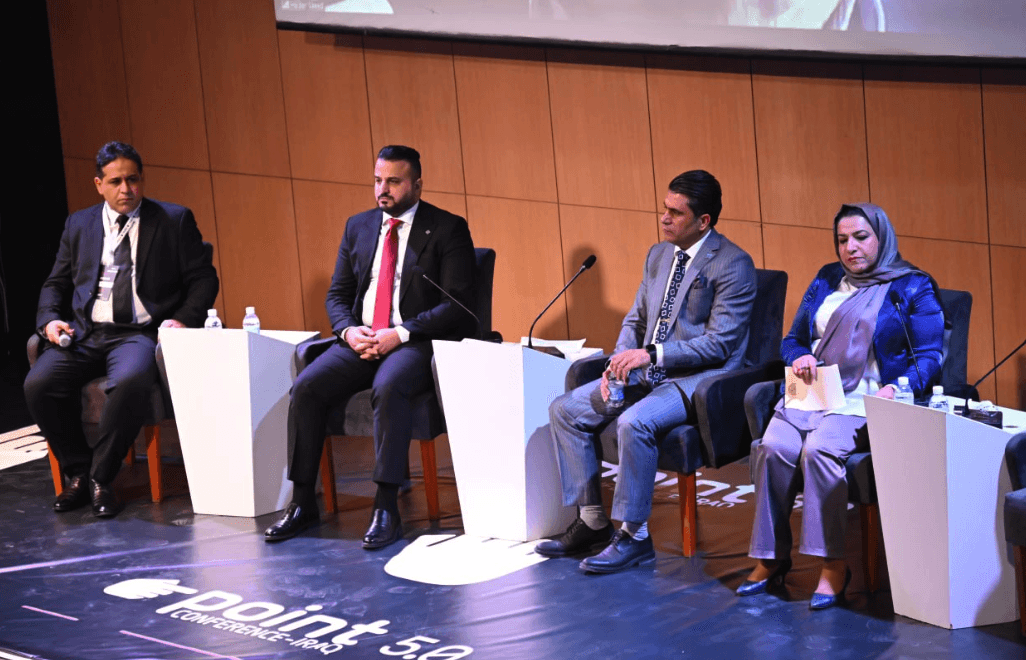
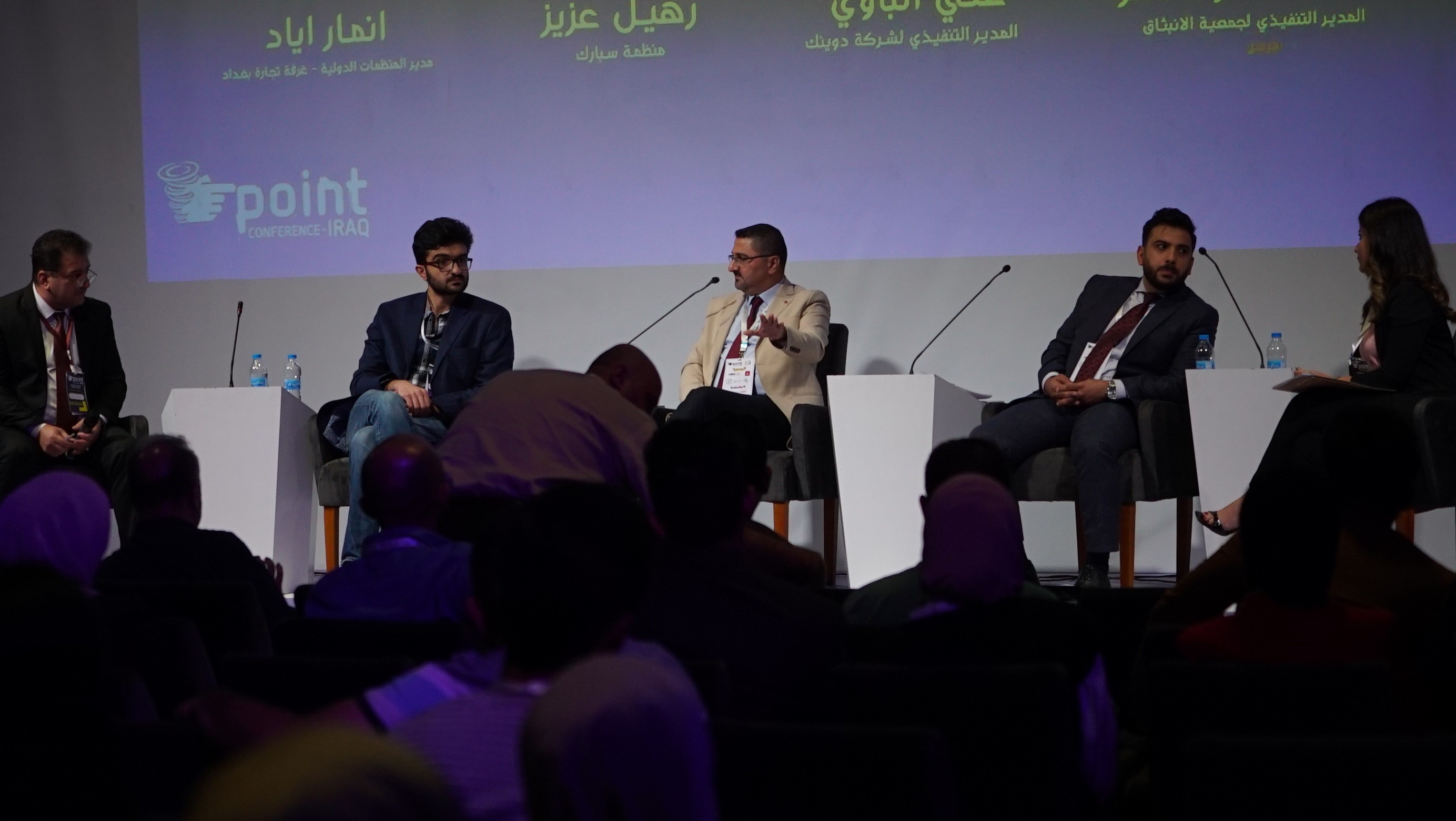
With the question, 'Are Freedoms in Danger?' the first session of the Point Iraq Conference in its fifth edition kicked off to discuss the trajectory of freedom of expression under the title 'From February Protests to October... The First Draft of the Opinion Freedom Law Over 12 Years Old.'
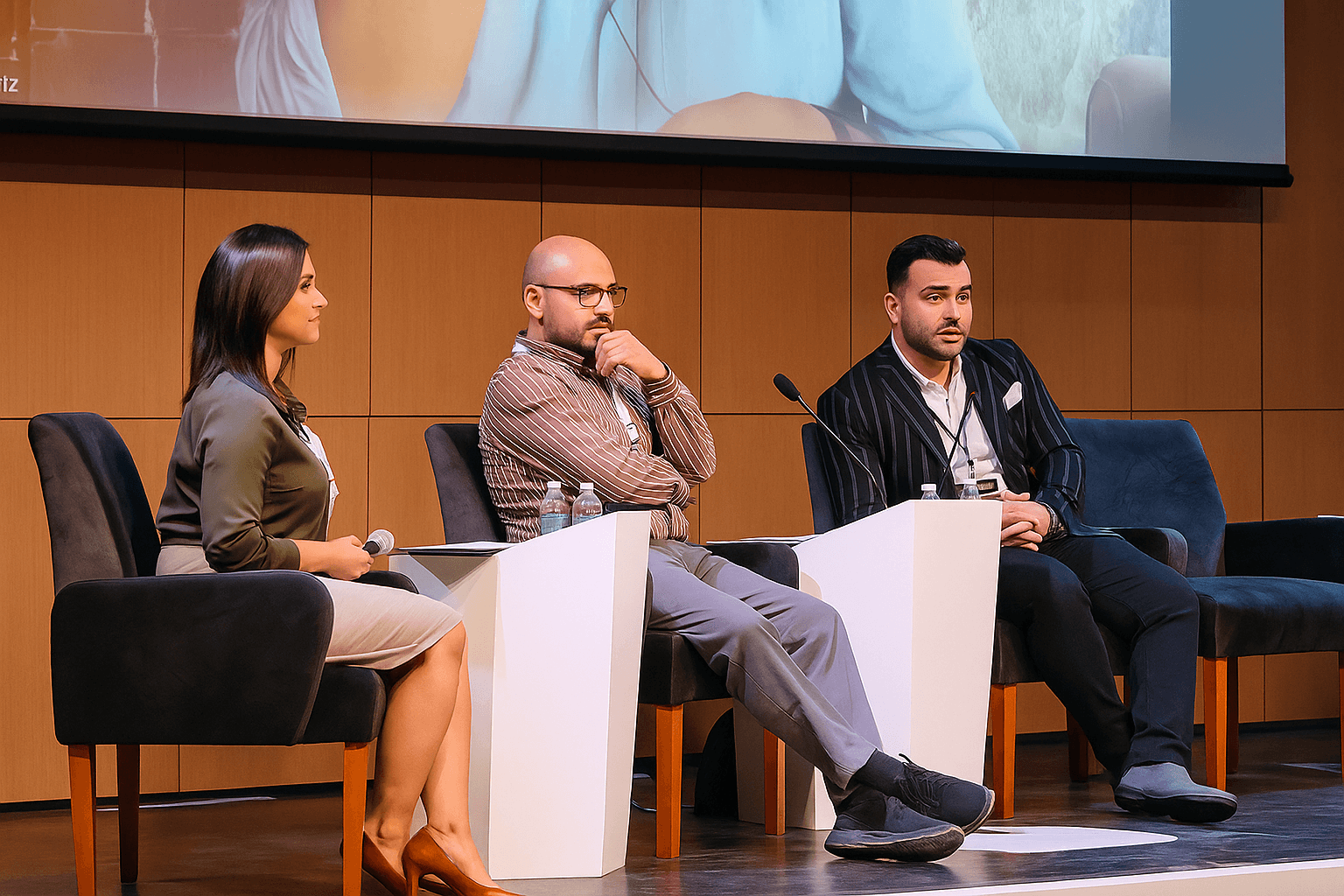
The session was attended by the parliamentary legal committee member, MP Sajad Salem, the deputy chair of the parliamentary human rights committee, MP Dr. Wahda Al-Jumaili, human rights advocate and academic, Dr. Saad Saloom, in addition to the head of the research department at the Arab Center for Research and Policy Studies in Qatar, Dr. Haider Saeed, Facilitated by the president of the Tawasul Youth Empowerment Organization, Wissam Jafar, highlighted that we live with 'conditional freedoms amidst terrorism and violence' and that the masses are fueled by 'hate speech threatening social peace.' They also agreed that the constitution was clear in guaranteeing freedom of expression in Article 38, without the need for regulating legislation.Regarding the challenges that civil society has faced in its efforts to consolidate the Freedom of Expression law since it was first introduced in 2011 until now, Dr. Saad Saloom spoke, saying, 'After 20 years since the American invasion of Iraq, specifically from the start of the protests in 2011 to the October 2019 protests and beyond... I can say that what we practice as freedoms are conditional.'Saloom explains that these are 'freedoms shrouded in fear, conditioned by terrorism and violence... freedoms conditioned by a lack of trust and citizenship between the authorities in all their forms and civil society.' He continues, saying, 'So far, we cannot address this problem... the cause may be one of the parties or both.''Why do we want to regulate freedom of expression?' Saloom asks and answers, 'The conviction we have reached since entering the parliament is that we should not legislate a law for freedom of expression, because legislation would restrict freedom of expression rather than guarantee it.
''It is a mistake to seek to regulate these freedoms,' Saloom explains. 'Because in the current composition of the parliament, the law will be against freedoms.Saad Saloom views the current composition of the parliament and the impact of civil society on it, stating that "the absence of a significant representation within the parliament will not achieve a balance equation." He also mentions that the current timing is not suitable, given that civil society is currently in a weaker state than it was in 2003.Saloom, in his discussion of alternatives, emphasizes the importance of bridging the relationship between the state and civil society and closing the gap between them, as "countries cannot be built without this cooperation and bridging.
"He stresses that "we need to protect freedom of expression, and without state institutions, we cannot protect freedom of expression. Therefore, the problem does not lie in the absence of legislation but in the absence of state institutions that ensure freedoms." He further explains that the priority now is "building state institutions and believing in the state, believing in diversity." He warns that "Iraq is now moving towards losing its diversity. Minorities are starting to emigrate, and Iraq is losing them."Saloom also highlights the importance of "shielding society from polarization that threatens social peace by turning hate speech into commercial projects that control public opinion." He underscores the need to "combat hate speech and not confuse it with freedom of expression."Regarding the developments within the halls of the parliament concerning the legislation of the Freedom of Expression law with its draft that was presented 12 years ago, parliamentary legal committee member MP Sajad Salem reveals the latest updates.
"The proposed draft law translates the approach of political forces to undermine freedoms for the new generation," Salem informed the attendees at Point conference. He clarified that "any idea that political forces believe in is embodied in legislation. The Freedom of Expression law, as well as the Right to Access Information law and others, include articles that clearly restrict freedoms, and they are a reflection of the approach of those dominant forces."Salem supported what Dr. Saad Saloom mentioned about the "imbalance within the parliament, which directly affects the formulation of laws and their presentation in a weak manner or with different outcomes."Salem pointed out that the latest updates to the draft law on Freedom of Expression and Peaceful Assembly and Demonstration included the removal of references to freedom of expression, and it now only encompasses "the law of peaceful assembly and demonstration." He continued, saying that "any demonstration must be requested from a district or administrative unit director, and the latter can reject the demonstration. Therefore, we see in this paragraph a violation of the constitutional rights of protesters.Regarding the term "public morals," Sajad Salem explains that this term is defined according to legal standards linked to international covenants. However, in Iraq, there is often confusion between public morals and customs, and traditions, and this is done according to the authorities' desires and moods. Currently, it appears to be in line with the authorities' mood, which restricts freedoms"In all honesty, there is a problem in the judicial system that affects freedoms and human rights," Salem says. He points out that the judiciary may not be the cause but rather influenced by the authorities, but the result is still a problem that affects freedoms and human rights. He emphasizes that with a judiciary that believes in freedoms, their practice will be ensured. However, with a judiciary influenced by the authorities' mood, the value of legislation will be limited. To date, we have not witnessed any judicial rulings based on international covenants guaranteeing freedom of expression and other human rights."Given the changes in freedom of expression resulting from the October protests, do the authorities listen to the protests? Dr. Haider Saeed responds by stating, "The authorities do not listen to what we want. The authorities see that repression or restriction is their goal – to maintain control."
Dr. Haider Saeed adds that "what happened in October was a kind of feeling of power, but it's temporary power that may not necessarily continue. Now, there is what I call the ideology of power, which has gone beyond the issue of control and has taken a broader space. We saw this, for example, in the gender issue, and in my opinion, it was not only related to religious ideology but also to masculinity and several other factors." He points out that this explains why they are now seeing more dangerous and restrictive draft laws for freedom.He explains that "the freedoms we obtained after 2003 were not institutionalized freedoms." He goes on to say, "The first draft of the Freedom of Expression law was formulated in May 2011 and was presented by the Maliki government after the February protests. The authorities at that time began to perceive the protest voices as a threat, and later we witnessed assassinations of important activists in several cities and provinces."Saeed emphasizes that "the authorities have not learned from previous experiences since 2010 until today," expressing concern that "in such a situation, we may reach a point where the current draft is voted on, and it is a bad and dangerous draft."In contrast, Deputy Chair of the Parliamentary Human Rights Committee, Dr. Wahda Al-Jumaili, says that "there is no insistence from political forces and political leaders to pass this law during this period. Instead, there are objections to it".
Dr. Wahda Al-Jumaili added that "the previous version presented in 2010 granted more power to the government to restrict freedoms. However, in the current government under Prime Minister Mustafa Al-Kadhimi, they sent us proposals, not a draft law, containing good amendments to the previous draft." She emphasized that "based on the constitution, freedom of expression will be removed from the law and will only be regulated for the organization of public assembly and peaceful demonstrations because the constitutional article did not specify the regulation of freedom of expression by law."Al-Jumaili explained that "the issue of public versus private assembly is a matter of debate in terms of classification. For example, it is possible that a mosque and the sermon delivered by the imam to the worshippers, where he warns them about the dangers of drugs, falls under public assembly and requires government approval... Therefore, it needs more clarification."
She stressed, "With the protest movement and the significant expansion in the concept of democracy, we need laws that regulate and ensure the practice of democracy." Regarding approval by the head of the administrative unit, Al-Jumaili mentioned that there are "proposals suggesting that the governor should be responsible for it. Others have suggested that the judiciary should have the final say because it is a neutral entity. Some have also requested that approval should come from the Ministry of Interior.
Gallery
Memories from past Events
Content


FAQ
Frequently Asked Question
I have a question
When and where will the next conference take place?
The conference will be held on June 24–25, 2024 in Sarajevo at Dom Mladih.
Who can attend the conference?
How can I register to attend?
Will the conference be live-streamed?




Partners



Tawasoul Organization for Youth Empowerment · Iraq – Baghdad – Karradah city
+964 770 790 6400
Tawasoul Organization for Youth Empowerment · Iraq – Baghdad – Karradah city ·
Mobile: +964 770 211 1332
Copyright©2025.Pointiraq. All Right Reserved.