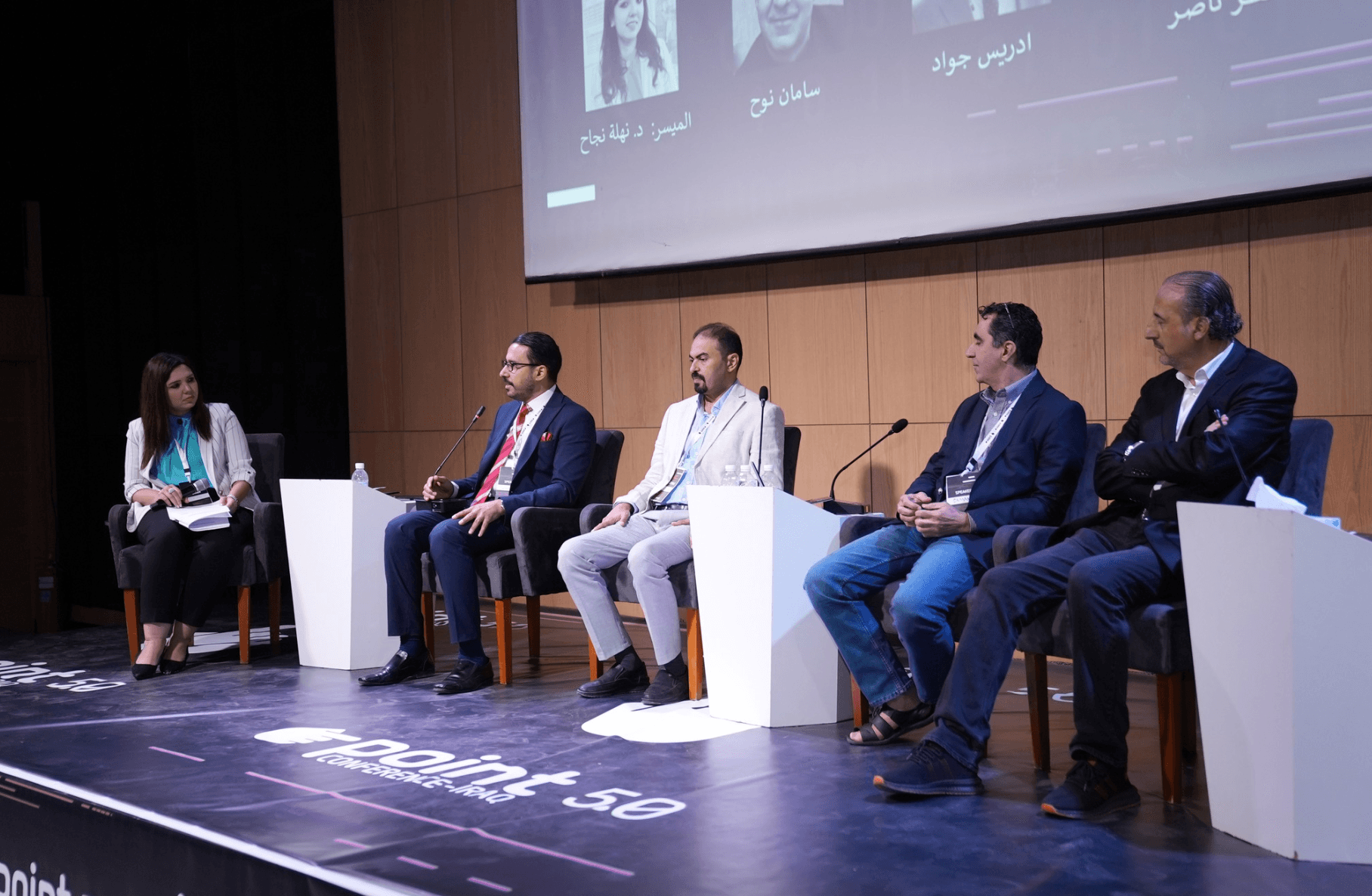
How to Create Independent Media Professionally and Financially, Free from Political and Partisan Influence.
September 16, 2023
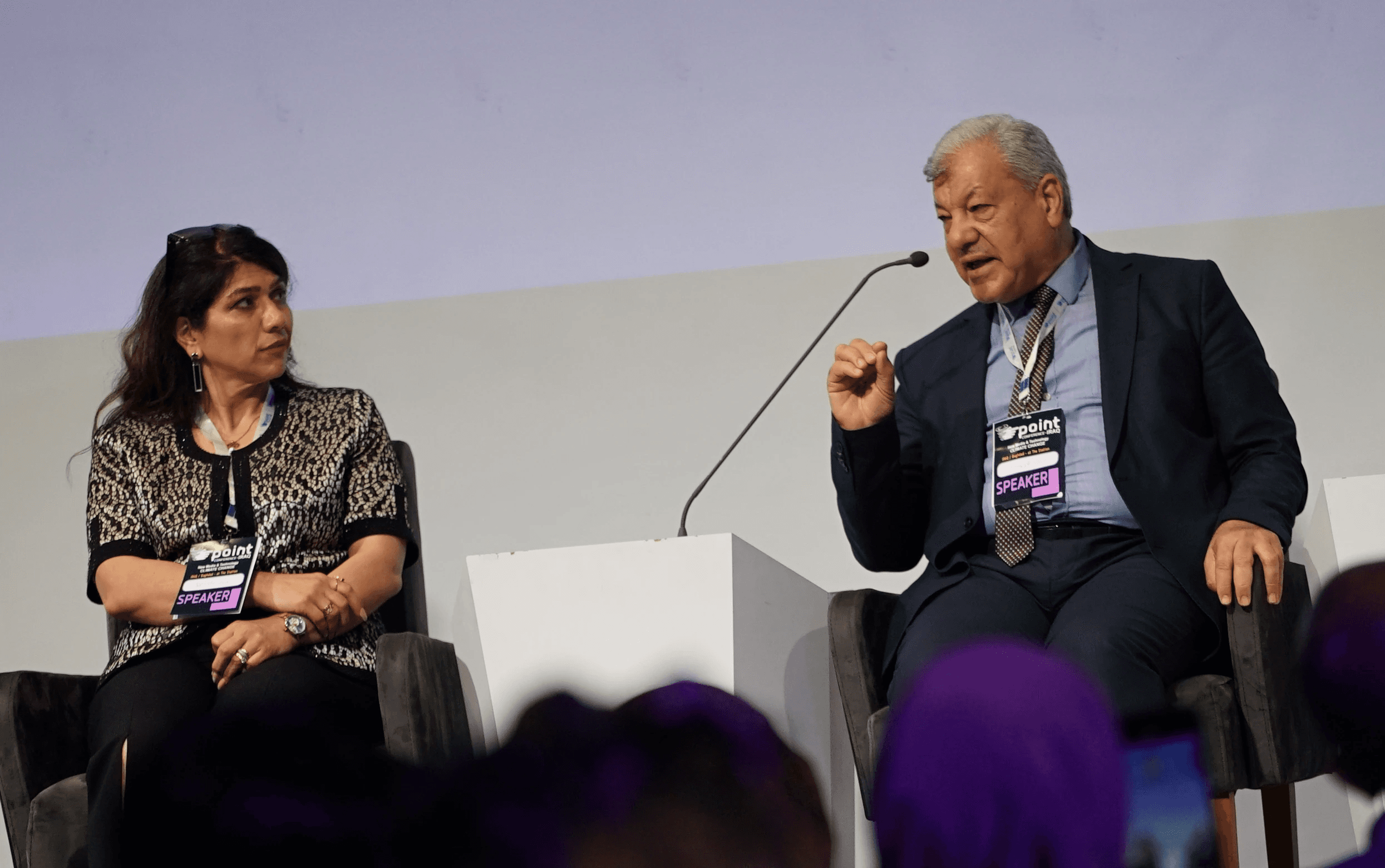
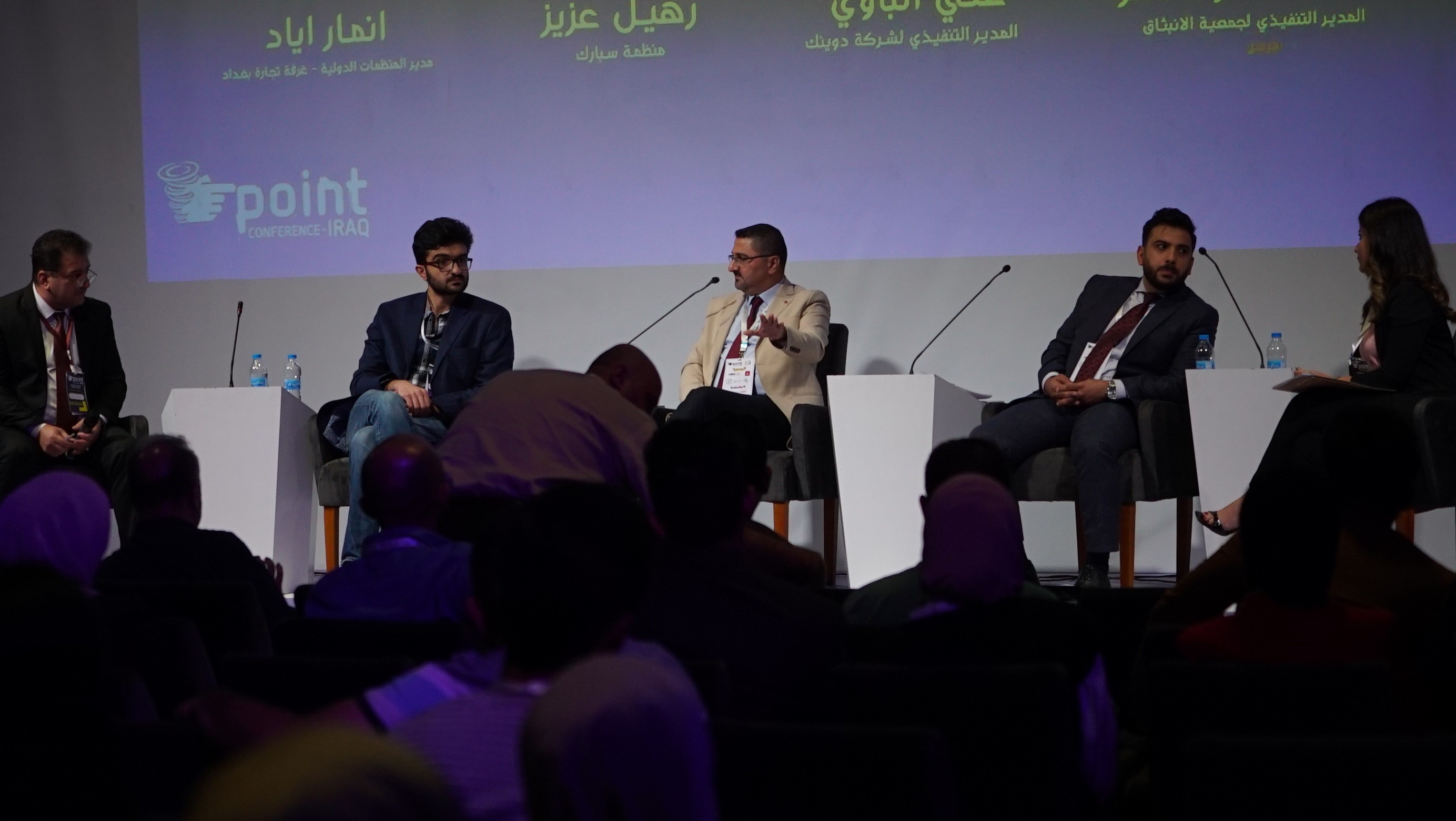
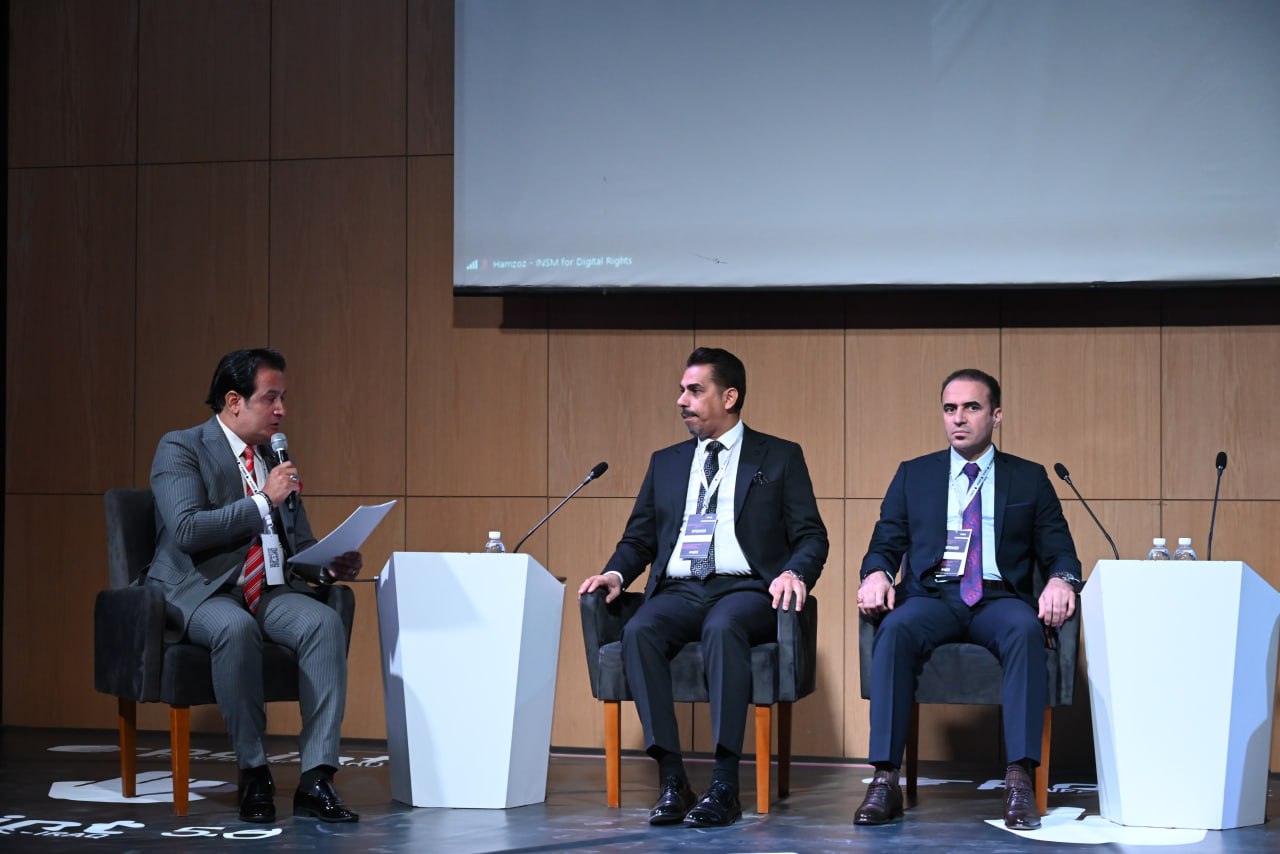
The session began with a presentation by Tamara Emad - Director of the Iraq News Meter Project - for 15 minutes, discussing the credibility index of Iraqi media channels according to the methodology of the News Meter, showcasing examples of good and bad practices in media content dissemination.
Nahla to Idrees: "Today, we observe the Iraqi landscape over the past few years since 2018. How would you describe the media during this period?"
Idrees: "In the last five years, there have been many changes in media presentation and handling of issues. Let's start with the October events and attempts to neutralize the media. During my academic studies in the Master's program focusing on investigative journalism and freedom of expression, our channel was shut down along with others in Baghdad. The next day, I had lectures on investigation and freedom of expression. I couldn't engage with the lecture because we study one thing and face a completely different reality. Even satellite channels were uncertain about how to deal with October and the government. They hesitated for a long time before taking a specific direction. Some channels attempted to neutralize the protests and downplay their significance, while others tried the opposite. We faced restrictions from security forces, and some protesters viewed journalists negatively. We couldn't carry out our work normally."
"Afterward, the COVID-19 crisis in 2020 posed challenges in information dissemination and restricted work freedom due to curfews. Even after the pandemic, media restrictions persisted as security forces barred journalists from coverage, demanding authorizations from Baghdad Operations Command for filming, despite the cancellation of this requirement. Then, unexpectedly, there were directives banning interaction with journalists and prohibiting them from filming."
"Nahla to Muntathar: What are the challenges within journalistic institutions and how have they impacted journalists' productivity?"
Muntathar: "Is independent media the sole choice or one among several options? In my opinion, independent journalism is a necessary choice because we've chosen the sole option of a democratic Iraq, which cannot exist without freedom of expression and independent journalism. The crucial factor for advancing independent media is the presence of freedom of expression, which is the yardstick for the existence of democracy. Freedom of expression cannot exist without independent journalism. We face several challenges, internal and external. Internally in Iraq, the security challenge led to the loss of many journalists and opinion leaders' lives. The second challenge is the absence of democratic legislation. It's illogical that in today's democratic Iraq, the constitution guarantees freedom of expression in Article 38, yet we are judged according to penal laws enacted in the 1970s under the whims of the Ba'ath Party and dictatorial rule. Free journalism in democratic countries is a fundamental principle because those countries have a diverse economic sector, and independent journalism is tied to economic diversity."
"Nahla to Hassan: How do you view Iraqi journalism post-2003?"
Hassan: "What happened in Iraq in 2003 was an earthquake that affected Iraqi society, which reflected in the reality of Iraqi media. Freedom of expression didn't progress gradually; it came as an imported experience from outside, and suddenly, overnight, we found ourselves in absolute freedom. The current characteristic of journalism is chaos, not freedom of expression. Journalism has become a profession for those who aren't professionals. What happened after 2018 is that Iraqi media reverted to a pattern of shocks. There was a shock in Baghdad (October protests), and Iraqi media struggled with how to handle it. Some journalists engaged in the protests, becoming part of the news stories, while others maintained neutrality by merely depicting the events. After 2019, many doors opened for journalists, and Iraqi media needs to rid itself of the internal censor, the remnants of the past, and elevate itself to the global or Arab media standard. Arab countries have media ministries that dictate what's suitable for publishing and broadcasting according to set guidelines and laws, whereas Iraqi media is characterized by chaos. Some journalists have turned themselves into stars and transformed into extortion tools for politicians, especially after trending became the media standard rather than media setting the trend."
"Nahla: How did the influx of newcomers impact journalism?"
Hassan: "Any respectable institution has criteria for accepting employees. For instance, the journalists' union issues its identity card only after meeting requirements and passing competency tests. Even after passing, there are levels within membership, and each elevation requires a new test. These standards fortify work and ensure filtration of those accepted. Similar standards should exist in media institutions. There must be criteria for the content produced and broadcasted, monitoring journalists' performance, but unfortunately, some journalists have become an untouchable authority, accountable to none. There's a need to set standards and frameworks for monitoring and fortifying work. As we saw recently, the News Meter Observatory presented an important and distinctive study that I hope media institutions can benefit from."
"Nahla to Saman: What are the indicators and needs for shaping a professional and independent media in Iraq?"
Saman: "The recent analysis from News Meter insists on instilling hope, but the latest international index places us at an extremely delayed stage of media freedom. We don't have professional independent media; instead, we have only a diverse media. Not just Iraq but the entire Middle East is in continuous regression. Even Turkey, which is now considered the third-largest jailer of journalists, and Iran is regressing because reformists failed to bring change. The Gulf states' reality is clear. Tunisia was the last bastion of freedom of expression, but now it's regressing too. What do we need? Media is an industry, and all the foundational elements of this industry are unavailable in Iraq. Simple examples like Al-Mada today compared to 10 years ago, and the same with Al-Zaman. Iraqi voices have disappeared, and NRT News ended days ago. Why isn't there a media industry? Because we lack all the components of the industry, no laws, no union status, no government ministries or institutions, and all media and press institutions lack the basics of an industry; they lack a work curriculum, work policies, harassment prevention, data verification mechanisms, or even management protocols. Competition rules are absent; the market isn't clean. Analytical capacities of journalists are deteriorating, and we lack journalists with analytical skills. Journalism has become closer to social media reporting. There's no vision, substance, or data journalism. Additionally, there's political funding. We need to form a high council for journalism."
"Idrees responds to Hassan: I don't agree with the necessity of a Ministry of Information but rather with the formation of a high council for journalism."
"We have over 2,000 graduates from the College of Media annually, but they struggle to enter the job market due to a lack of necessary skills. Consequently, they are forced to attend training workshops before employment. The responsibility lies with the media colleges and then the unions.
Interventions:
Ali Abbas: Why this failure despite significant amounts of funding from international donors since the beginning?
Samman: We have media funded by countries and political parties, making it unable to be considered independent. Additionally, we have media funded by civil society organizations focusing on writing about societal cohesion in journalism, but this is more of an illusion.
Media is about presenting data that isn't circulated, not just what is announced. This is journalistic data replicated by media institutions.
Hussein Al-Hatimi: We have an issue with the inputs into media colleges. Some don't even know how to write; how can we teach them the principles of media? Additionally, how are the standards of media leadership determined, dictating what gets published and what doesn't? Are channel owners or journalists responsible? Also, hundreds of journalists were laid off due to the financial crisis in 2016. Who advocated for them? We haven't heard about the union taking a stand. What's the relationship between media institutions and the country's financial crisis? We also have a problem with the rejection of integrating digital education in schools.
Samman: Egypt, with a population of 100 million, has 9,000 journalists, while we have over 22,000 journalists.
Talib: What's the reason for the decline of journalism in Iraq? Why does a graduate from Baghdad University work as a correspondent while a graduate from a private college works as an editor in newsroom? Is it intentional by the government or a failure of the union?
Idris: Neither of these. The issue is related to the students themselves and a particular part of the curriculum, as it's outdated."
Gallery
Memories from past Events
Content
FAQ
Frequently Asked Question
I have a question
When and where will the next conference take place?
The conference will be held on June 24–25, 2024 in Sarajevo at Dom Mladih.
Who can attend the conference?
How can I register to attend?
Will the conference be live-streamed?




Partners



Tawasoul Organization for Youth Empowerment · Iraq – Baghdad – Karradah city
+964 770 790 6400
Tawasoul Organization for Youth Empowerment · Iraq – Baghdad – Karradah city ·
Mobile: +964 770 211 1332
Copyright©2025.Pointiraq. All Right Reserved.