Twenty years after the invasion of Iraq, what have we learned from our mistakes? Do we need a new social contract?
September 16, 2023
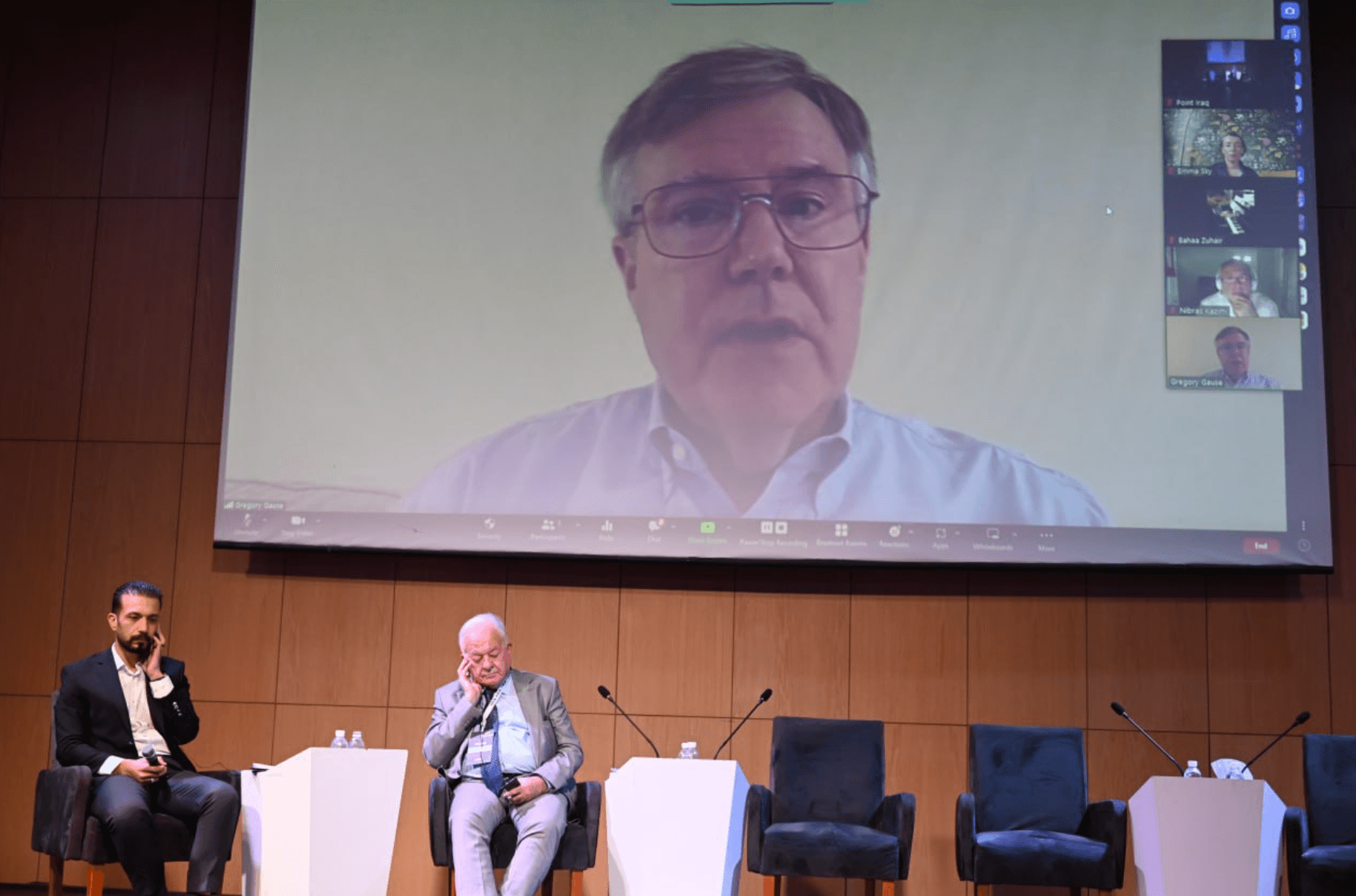
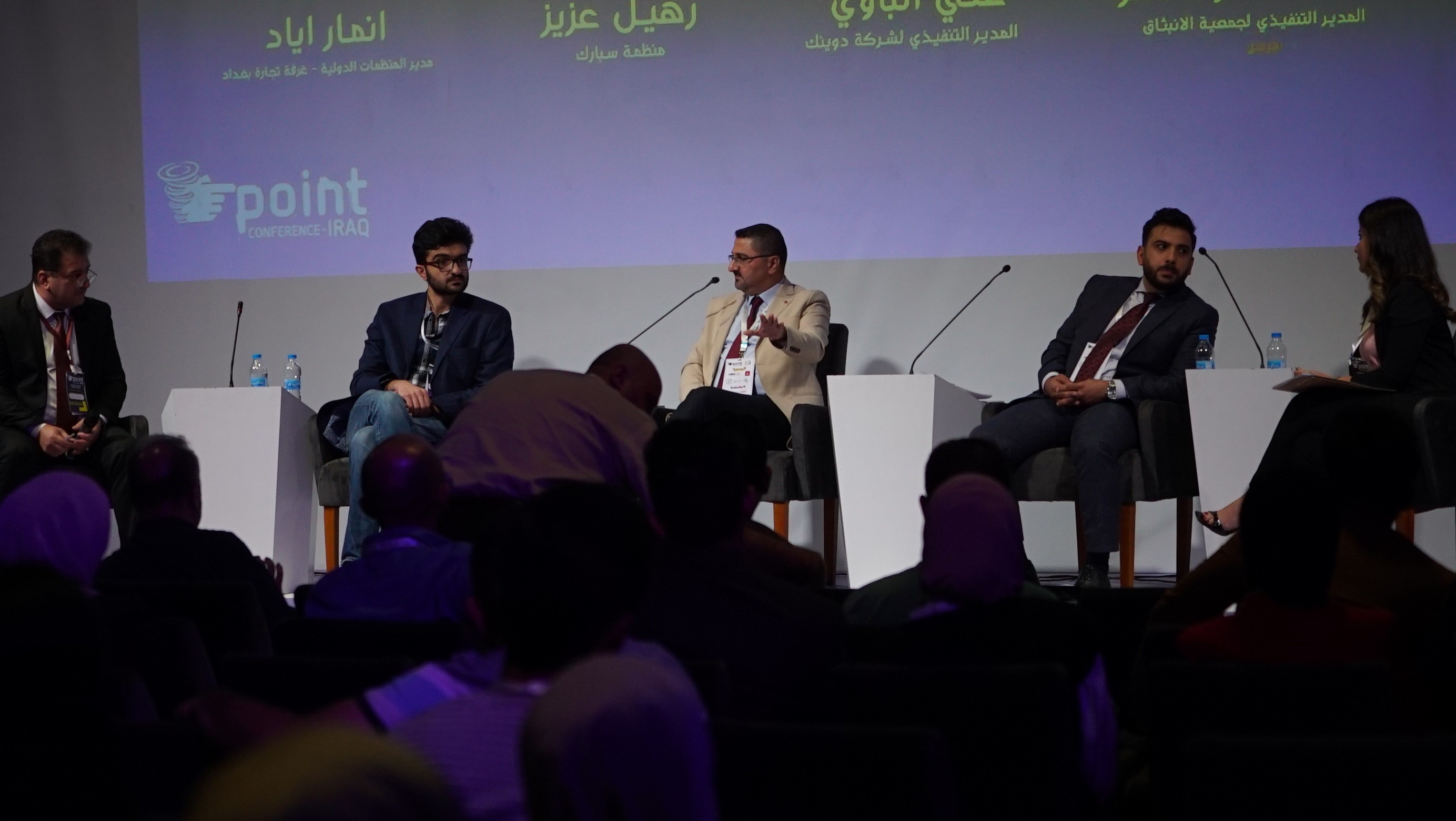
What has resulted from the American invasion of Iraq? Is it still among the top priorities on the White House agenda 20 years later? What about before 2003? Did the opposition set conditions for what came after the overthrow of Saddam Hussein, or did they just want to overthrow him and take power? These issues and more were on the agenda of the fifth session of the Point Iraq Conference in 2023.
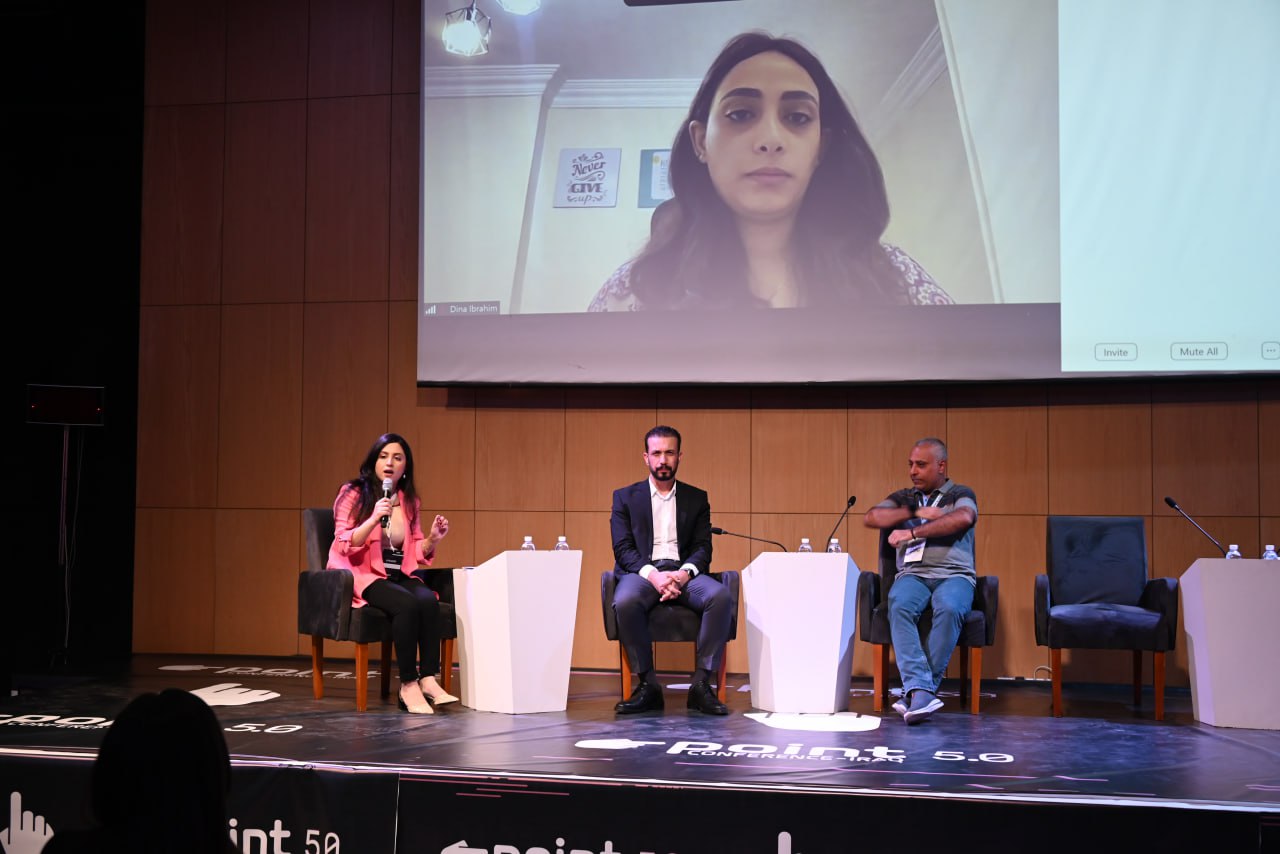
The director of the Iraqi Observatory for Human Rights, Mustafa Saadoon, discussed these topics with the participants, including the senior researchers from the Bush Institute for Foreign Relations and the academic from Texas University, Gregory Gause, as well as the author of the book "The Collapse" and academic at Yale University, Emma Sky. And visiting scholar at the Hudson Institute from Virginia, Nibras Kazimi, and the politician and academic, Dr. Ali Al-Rufaie.
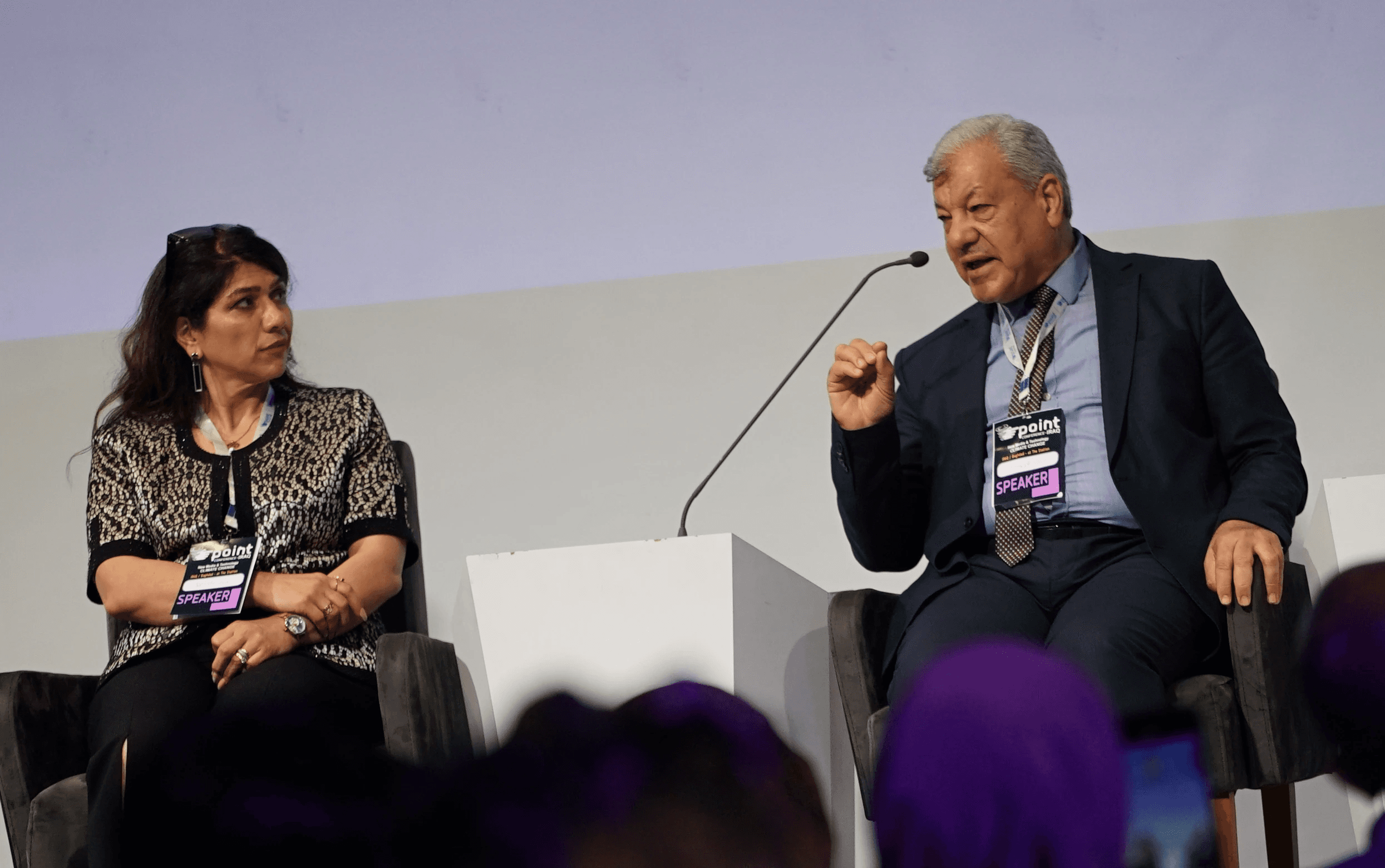
What does the invasion yield other than destruction and chaos, and domination of oil and gas?" Dr. Ali Al-Rufaie began his discussion on the consequences of the Iraq invasion with this sentence. He added, "Occupation does not lead to the establishment of a stable system. Yes, they established a system they call the 'political process,' but it departs from the principles of citizenship and relies on mechanisms that weaken the social fabric, firmly entrenched in perpetuating the so-called political process." He pointed out that "what some of them (current leaders of the political process) propose in terms of calling for a new political contract is a result of their perception of failure."
Al-Rufaie explained, "Democracy is not limited to elections but includes freedom of expression and the establishment of state institutions operating according to the constitution and laws. However, our institutions are currently captive to those who control power and political money, and political money even influences elections."
He noted that the Americans "deliberately undermined the role of political parties in Iraq. Democracy depends on party pluralism, but they only support one color. For example, what support have these countries and even the Iraqi government provided to emerging parties, especially since they were formed according to the Party Law, which stipulates government assistance to parties?
But is Iraq still in a state of collapse, or is it on the verge of a new collapse? The author of "The Collapse," Emma Sky, believes that there are efforts in Iraq trying to rebuild institutions.
Sky says, "Iraq is now much better than it used to be. The state institutions have been partially rebuilt, especially when compared to the situation in 2003 when the United States toppled the state, dissolved the Baath Party, and all security institutions." Sky believes that the Americans were sincere and truly believed they could build a strong and stable democratic Iraq after the invasion. However, the vision for post-Saddam and post-Baath regime Iraq was not clear. There were three directions among American decision-makers in this regard. The first group supported only toppling Saddam and putting someone in his place, like Ahmed Chalabi, and then leaving. The second group opposed the invasion of Iraq from the beginning. The third group believed that no one in Iraq could be handed power after the invasion because Saddam didn't leave anyone reliable behind after his fall. He was keen on placing his trust in key positions, and Iraqis abroad were not in agreement among themselves.
She also points out that many entities share responsibility for the chaos in Iraq, but most blame the American side. In reality, one of the most significant mistakes made by the Americans was "their heavy reliance on the Iraqi opposition that was in exile." However, she believes that the Americans genuinely had the intention to build a strong democratic Iraq, similar to successful experiences in Germany and Japan. Still, the various parties involved in rebuilding Iraq, including the Iraqi people, did not fully grasp the extent of the destruction caused by the Baath Party and the economic embargo on Iraq and its society itself.
She continues by saying, "We also saw how Iraq turned into a civil war, and all the political formulations after 2003 relied on parties trying to seize power to protect their interests rather than serving and building Iraq. These parties have become sub-identities, whether Sunni, Shia, Kurdish, or others. Then there were attempts to restore stability after 2007 with the emergence of the Awakening forces and others, followed by the 2010 elections, but these efforts were shattered by ISIS when it occupied major cities in Iraq. Despite all these difficult circumstances, there are Iraqi efforts trying to rebuild institutions."
Regarding the relationship between Baghdad and Washington, it has gone through multiple stages. However, today, the United States has many other priorities, such as the situation in Ukraine and its relationship with China.
Sky pointed out that "when the American forces withdrew from Iraq, there were two things we couldn't foresee. The first is the extensive spread of corruption, and the transformation of the government into a kleptocratic government, a 'thieving government.' The second is the environment. At that time, we were focused on the security situation. Now everyone is talking about politics, but when you look at the temperatures in Iraq exceeding 50 degrees Celsius, it indicates mismanagement of Iraq's resources. It requires agreements and arrangements with countries that exploit Iraq's resources, including countries building dams on water sources that flow into Iraq. This also requires a reconfiguration involving the government and civil society organizations." She cautioned by saying, "We've all witnessed what happened in Libya and other countries in recent days, which could also happen in Iraq due to the mismanagement of water resources."
"I feel that Mrs. Emma Sky's answer is very clear," emphasized Nibras Kazimi, elaborating further by saying, "The process of rebuilding Iraq is no longer a priority in White House discussions, and talking about a strategy for that is a misleading title, and it hasn't received a vote in Congress."
Kazimi explained that "there is a long-term alliance between the United States, Turkey, and Israel, but Iraq is distant from this kind of alliance with the United States. Therefore, Iraq should not expect anything from the American side because Iraq has become a burden for the American side, and it has brought a lot of negativity and narratives about American failure in Iraq. So, we must establish a new narrative and new literature."
He then posed the question, "Is Iraq still important in the region?" and answered, "Yes, no one can deny that Iraq is a strategically important country in the region."
Kazimi also recalled the period before 2003, highlighting that "the Iraqi opposition to Saddam had a vision for what would come after his overthrow. This vision was articulated in the Salahuddin meeting in 1992 and was later renewed at the London conference. All the parties, including Islamic, nationalist, leftist, communist, and other religious groups, were represented, and they agreed on a revolutionary idea at the time, which was federalism."
Nibras Kazimi further adds that "the Iraqi opposition had a vision regarding the mechanisms for overthrowing Saddam Hussein and defeating the Baath Party, but it became clear after 2003 that any vision agreed upon clashed with its implementation, not to mention the multiplicity and intersection of American decision-making centers and the intricacies of execution, which hindered many of those visions."
About his new project, "Documentation of the Iraqi-American Interaction," Kazimi explains, "Unless there is some sort of meeting regarding the narratives, how everything happened, fell apart, where we are now, and where we are headed, it will be even more challenging if we add the social conflict, where everyone has a different version of the conflict about the past and the future. What we hope our project will do is provide the opportunity to access multiple narratives, which are complex and must be acknowledged and discussed, as the current narrative is simplistic and not applicable to what happened before and after 2003. When it comes to the relationship between Iraq and the United States, and the United States' relationship with Iraq, this entanglement on both sides has made it difficult for each to hear the other regarding this tense entanglement that has lasted for a long time, spanning forty years from 1980 to 2020. The destinies of both countries have become deeply intertwined, and the memories of both sides are now fading and confusing. What our project hopes to achieve is to document and talk to people who were connected to the decisions from both sides to present them to the Iraqi and American public. Hopefully, when they review these questions and gain more confidence that there is now a necessity for clarity to move beyond the past."
Much of the sources, stories, and narratives are archived in a simple and understandable way, and they clarify the reality of what happened after 2003," he added, noting that "the relationship between Iraq and the United States is complicated, and the memory of both parties is burdened with a lack of a unified vision and clarity. That's why this project involves talking to both sides with discussions based on documented information and trustworthy sources."
Gregory Gause, Head of the Department of International Affairs - Bush School - Texas A&M University, also agreed on the failure of the post-2003 experiment in Iraq. He stated that "promoting democracy in Iraq by the American side was a disappointment because the idea of building and implementing democracy in Iraq proved to be a failure. After experimenting with various strategies, from direct rule of Iraq to indirect rule, elections, and even building bureaucracy while destroying some of the foundations of governance, it was a very confusing strategy." Professor Gause believes that it was more of an exit strategy from Iraq than a sustainability strategy.
Gause further states that "the course of political reality in Iraq changed in parallel with changes in U.S. strategy. The Americans do not have an effective strategy for rebuilding Iraq because many regional players have an interest in intervening in Iraq and extending their influence."
As for whether Iraq is a priority for the United States or not, Gause points out that "the current U.S. administration has other priorities. These relate to U.S. foreign policies focusing on the Ukraine conflict, the challenges of the Chinese economic reality, and its impact on the United States, in East Asia and even in the Middle East itself. President Biden's priorities are lower regarding Iraq and higher regarding issues such as achieving reconciliation between Saudi Arabia and Israel, which requires the United States to commit to obligations with both parties. There are also some movements regarding the Palestinian issue, and this is where it seems that the Biden administration is devoting most of its time and effort within Middle East policies."
Gregory Gause points out that "the misunderstanding that has occurred between the political players in Iraq regarding the United States and its orientation in Iraq is very understandable. In Iraq, which was the center of U.S. foreign policy for all of its efforts for 10 years, these political leaders were the center of America's attention. Washington could have been a balancing point between the internal players and also between the regional players like Iran." He explains that what Emma and Nibras discussed, that the U.S. no longer dedicates space for discussing this issue and is no longer prepared to bring it up, is a fact. However, this has not yet been understood and absorbed by the internal forces in Iraq.
Gause warns of "other dangerous internal indicators, including the withdrawal of the Sadr movement while retaining its political weight on the Iraqi street. Despite this weight, it withdrew from the Council of Representatives. This indicates a point of weakness in the Iraqi parliamentary system. It also concerns the parties that emerged from the October protests."
He emphasizes that "democracy cannot breathe in the absence of good governance. There cannot be genuine democracy in the presence of corruption, as the Iraqi citizens will not find a way to the expected services from their government. Iraq cannot be an active player in the region with this corruption."
Gallery
Memories from past Events
Content



FAQ
Frequently Asked Question
I have a question
When and where will the next conference take place?
The conference will be held on June 24–25, 2024 in Sarajevo at Dom Mladih.
Who can attend the conference?
How can I register to attend?
Will the conference be live-streamed?





Partners




Tawasoul Organization for Youth Empowerment · Iraq – Baghdad – Karradah city
+964 770 790 6400
Tawasoul Organization for Youth Empowerment · Iraq – Baghdad – Karradah city ·
Mobile: +964 770 211 1332
Copyright©2025.Pointiraq. All Right Reserved.