Why does the Arab press neglect human beings and focus on the event during disasters and wars?
September 15, 2023
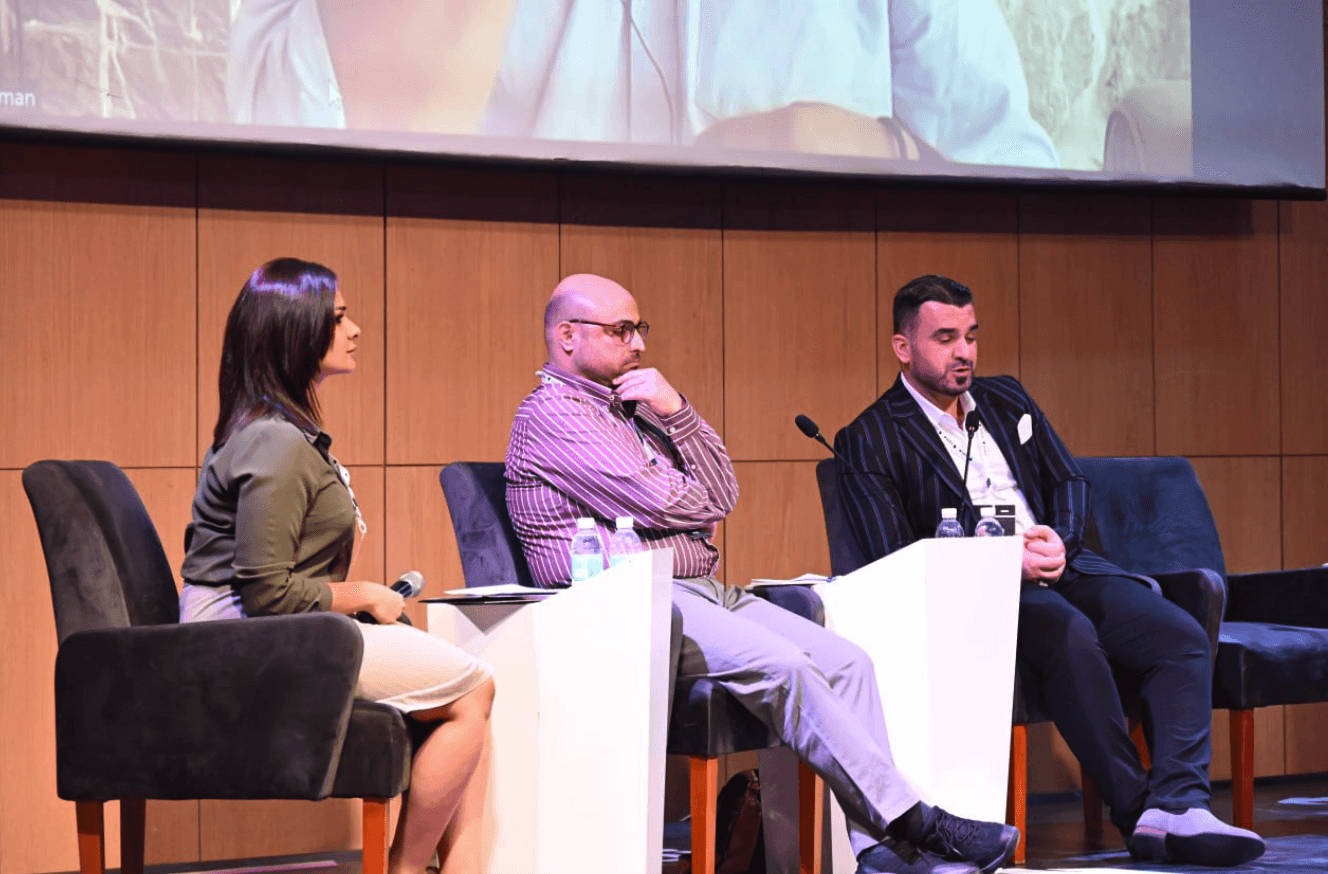
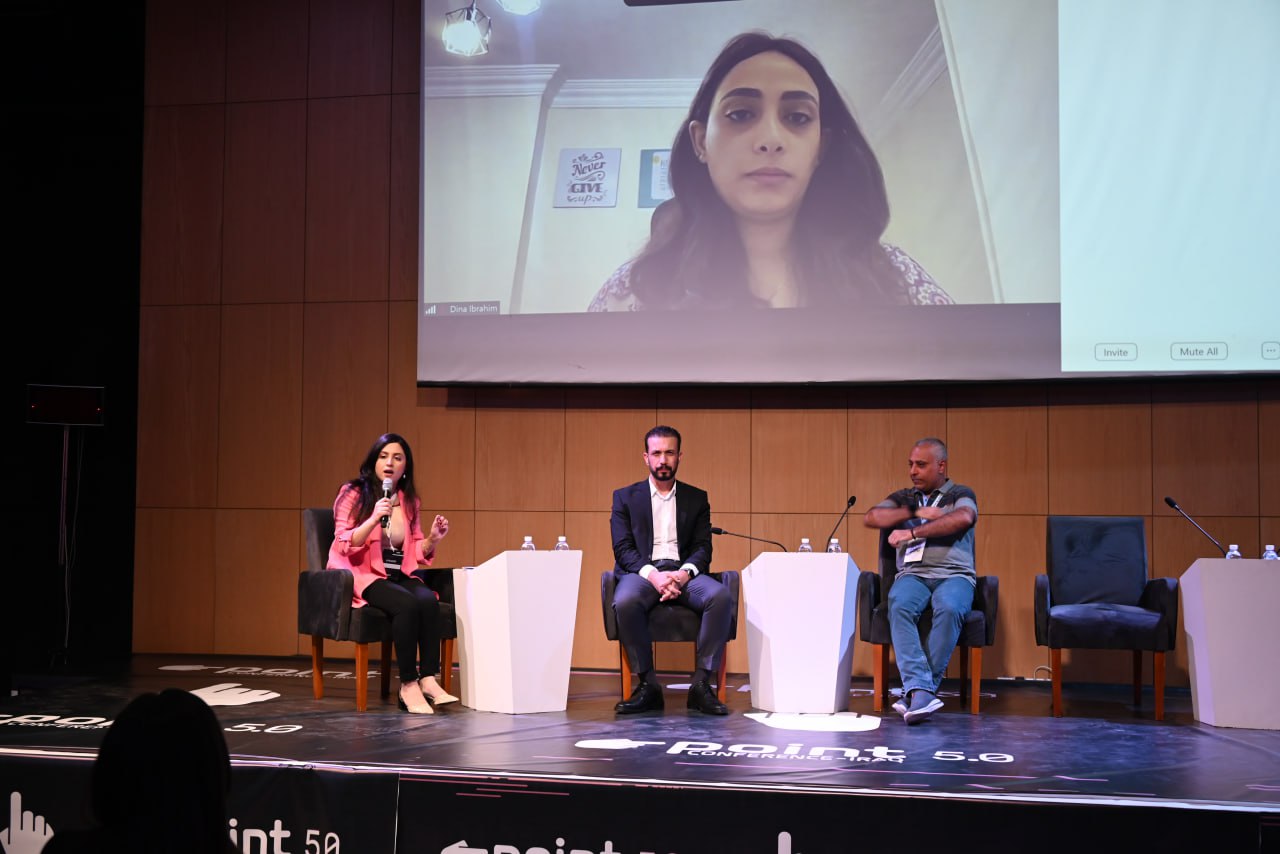
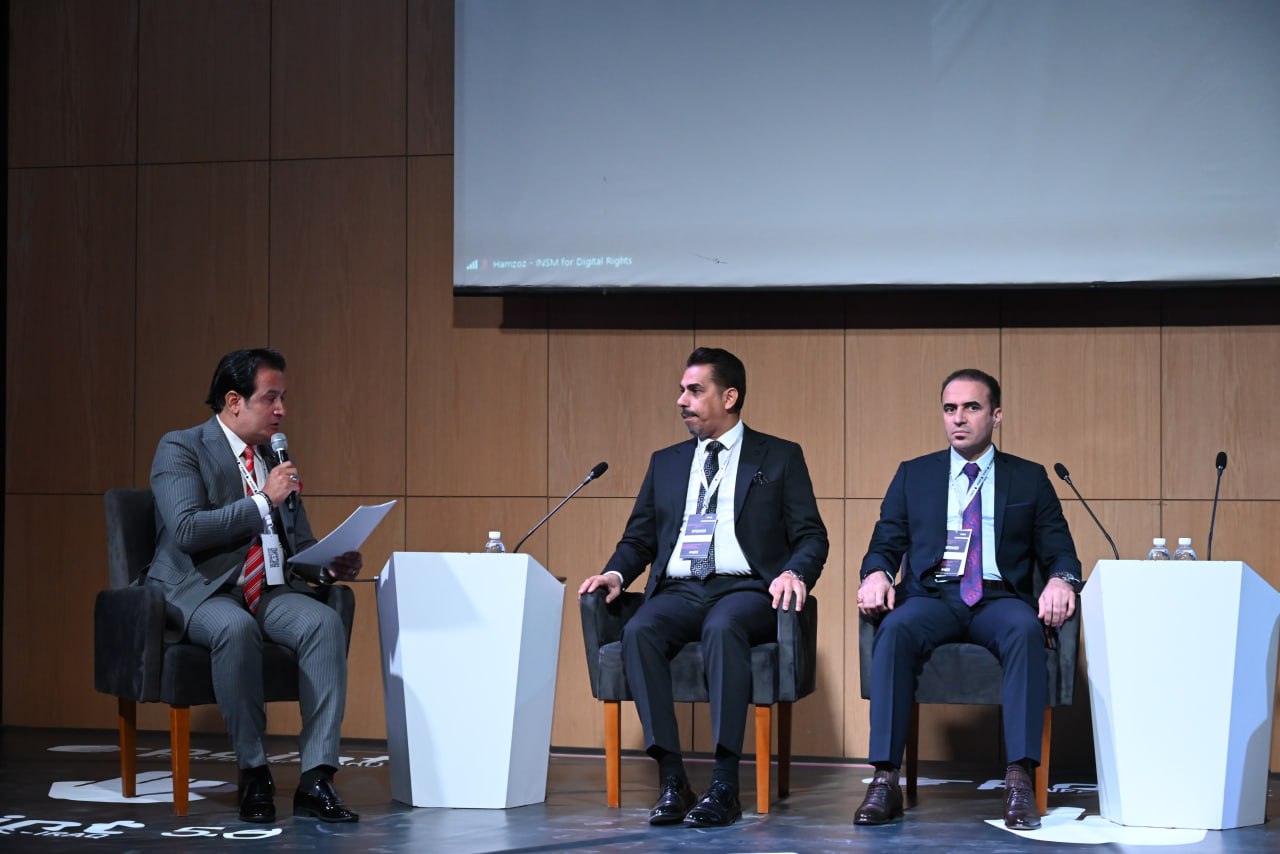
The session explored whether journalists truly neglect the human dimension in their coverage, whether they concentrate solely on events, and whether they sometimes manufacture events to elicit sympathy from the public. With these questions, the fourth session of the 5th Point Iraq Conference began, discussing the imbalance between the human aspect and events and how to convey reality from a solely human perspective.
The session featured participants such as Salah Baban, Editor-in-Chief of Baghdad Today Agency from Kurdistan, Sinan Mohammed, a journalist from The National in the UAE, Hiwa Osman 964 Network Manager from Kurdistan, and Omar Al-Jaffal, the Editor-in-Chief of Jammar website from Germany, Facilitated by the Journalist Zeinab Al-Mashat.
"Why do we focus on the event and forget how it affects people?" Salah Baban, the editor-in-chief of the Baghdad Today agency, answers this by stating, "Through my work in the media for the past 15 years, specifically in news agencies, I have found that the media faces two fundamental issues."
Baban explains that "the first issue is the absence of competence and creativity in narrative storytelling. We don't have journalists who possess storytelling skills, a rich vocabulary, and the imagination to employ the human aspect in the story, not just the news. In Iraq, we often cover news manufactured by politicians, not by citizens. We prioritize rush, putting others down, scandal, and fame over competence." He adds that "the second issue is the absence of an encouraging environment for creativity."
Regarding a solution, Baban believes that "we should start by breaking the established molds, as in Iraq, we tend to present stories in the form of news reports." He points out that "in 2011, I covered the story of a Kurdish calligrapher specializing in Arabic calligraphy, from a human-centered perspective, and it was published on Al Jazeera. Afterward, the calligrapher received five online job offers because the story highlighted the positive aspect of the subject matter, focusing on the human side, and avoiding politicization.
Snan Mohammed also weighs in, saying, "Throughout my career, I have never worked with an Iraqi institution. However, Iraqi institutions, unfortunately, whether funded by politicians or businessmen, tend to have their coverage directed to serve the interests and political inclinations of their funders or others."
He continues by noting that "there are other pressures on some agencies, sometimes even involving the use of violence or soft pressures that force them to turn a blind eye to certain issues or topics."
However, he points out that "many of those affected by events do not prefer to appear in the media due to security threats or societal reasons." He adds that "with the spread of social media, those affected have been encouraged to appear in the media, away from fear of distorting their image."
To make journalism successful in telling human stories, Mohammed emphasizes the importance of "not just reporting the news but also taking the time to analyze the story and connect it to its pillars, to open up perspectives for the recipient so that they understand the complete picture and interact with it." He provides an example, saying, "The Iraqi media covered the recent crisis between Baghdad and Erbil, but they did not pay attention to the fact that there's a citizen in Kurdistan who hasn't received his salary for the past four months. Or some projects have been halted, directly harming citizens here and there."
On the other hand, Hiwa Osman 964 Network Manager, talked about journalism that stems from the reality of citizens. He explained, "When we started the Network 964 project as a group of journalists who had previously worked in international institutions, we decided to offer something new to the Iraqi citizen/recipient. We tried to establish a new model in journalism, and we said, let's change the equation. We receive a lot of news from officials, institutions, and others, and there's no need to transfer their news from their platforms to ours. So, what's the impact of conveying this news on the citizens? Therefore, we decided to report the news of the citizens, covering their daily lives and their daily stories, and we took into consideration the youth demographic."
"We noticed that many Iraqis do not know each other. In the newsroom, we were surprised by strange stories that reached us from Basra, Thi Qar, Diyala, and other provinces. These are stories from the daily lives of Iraqi individuals," Osman says, and he continues, "We also noticed through our news website and social media pages that comments are about the content of the news rather than conflicts between different political or ideological factions, and this is a healthy situation, confirming the validity of our approach."
"In traditional journalism, we used to write for journalists and elites perhaps, but now at 964, we try to write for every citizen, from Zakho to Faw," according to Osman.
Omar Al-Jaffal, in turn, spoke about the need for community journalism, which is what the "Jammar" website produces, as he sees that "any country needs community journalism so that citizens can get to know each other."Al-Jaffal says, "We have a history of journalism that focused on high-ranking officials and elites, and then partisan journalism, but there was no community journalism... It wasn't until October that the importance of community journalism became clear, and it is our duty to continue this path."He adds, "Journalism has become, for a long time, merely a conduit for news, or more precisely, for press releases... So, the importance of community journalism is evident in conveying the voice of citizens, despite the challenges journalists face in engaging with and interviewing citizens.
Additionally, this type of journalism is costly and requires financial support.""How did you work with journalists to make their work professional in conveying an image of people away from pandering to the audience?" Al-Jaffal responds by saying, "The matter is cumulative; experience plays a role in it. It is accompanied by fact-checking, which was not practiced in Iraq. Information was taken from correspondents without listening to audio recordings or reviewing documents, and trust in it was blind. However, fact-checking is not a lack of trust but rather for verification and accuracy because the correspondent may have heard the information inaccurately or under the influence of something."Al-Jaffal also didn't forget to mention "the need for environmental journalism to explain the reasons behind natural disasters that occur in Iraq and the region in general, to be the voice of citizens as well."
Gallery
Memories from past Events
Content
FAQ
Frequently Asked Question
I have a question
When and where will the next conference take place?
The conference will be held on June 24–25, 2024 in Sarajevo at Dom Mladih.
Who can attend the conference?
How can I register to attend?
Will the conference be live-streamed?




Partners




Tawasoul Organization for Youth Empowerment · Iraq – Baghdad – Karradah city
+964 770 790 6400
Tawasoul Organization for Youth Empowerment · Iraq – Baghdad – Karradah city ·
Mobile: +964 770 211 1332
Copyright©2025.Pointiraq. All Right Reserved.