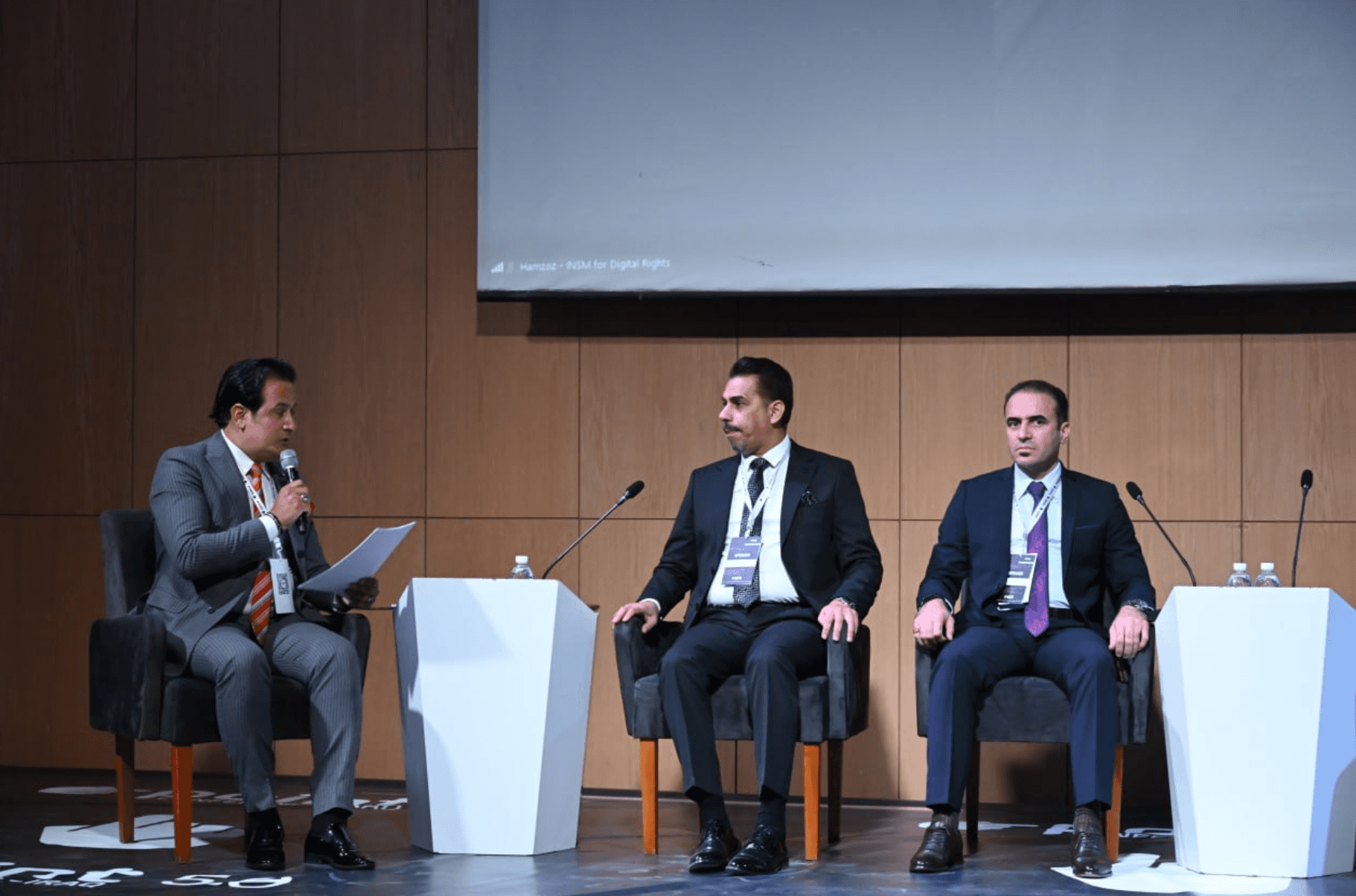
Internet freedom and digital tyranny: After the leak of citizens' data on Telegram, should the online environment be controlled?
September 16, 2023
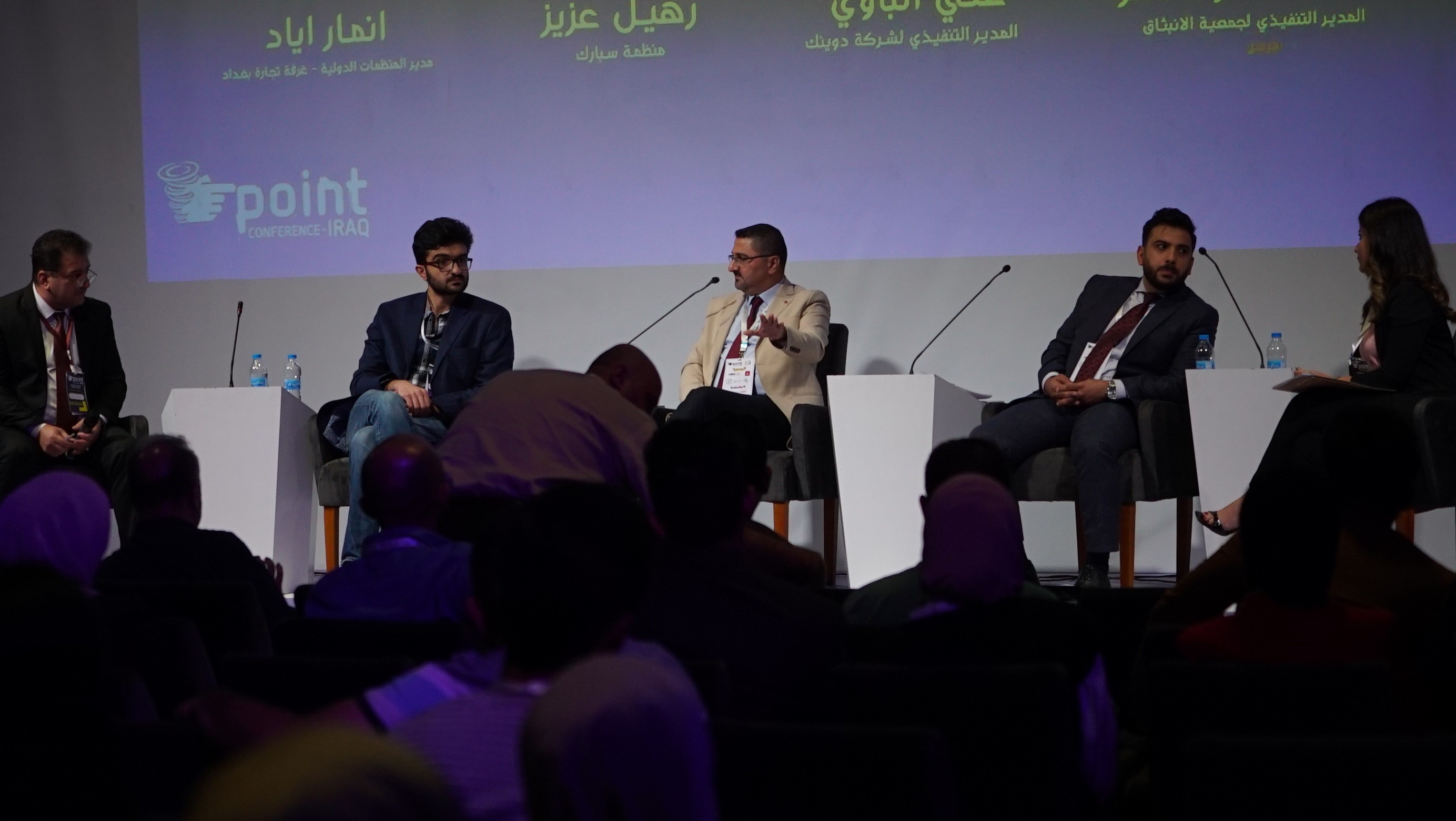
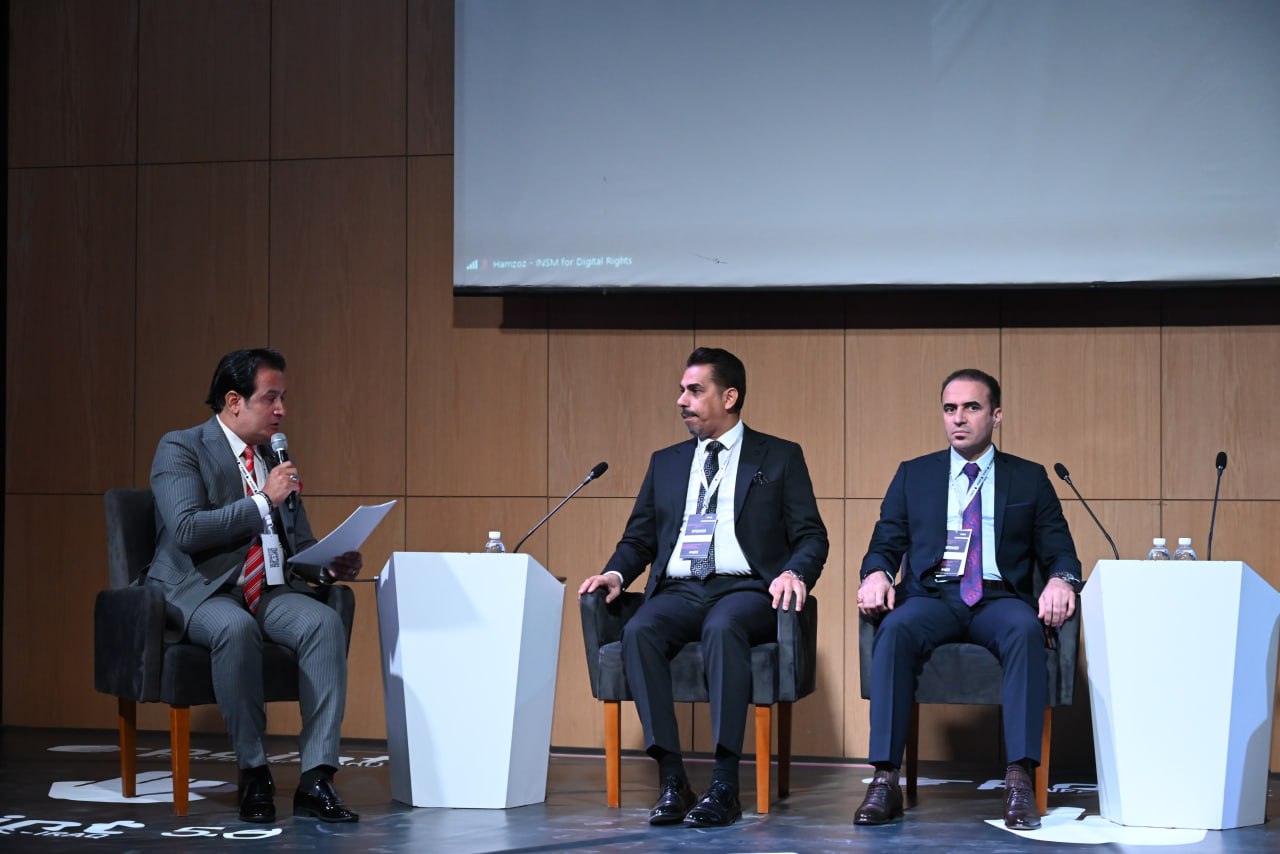
Ahmed to Amar: Is there justification for cutting off the internet and blocking websites in Iraq? According to international organizations, there are 65 countries also working on restricting the internet.
Amar: The internet is multi-functional, serving commercial, economic, social, and media purposes. To an extent, the internet environment has shifted from merely providing goods to manufacturing them, as it even influences users' psychological factors, especially considering that internet companies have specialized research centers for this aspect.
Technological progress revolves around information technology, whereas the approach taken by the Iraqi government to restrict the internet doesn't meet the standards of technological advancement.
Ahmed to Abdul Azim: The government has blocked pornographic websites and restricts the internet during exams. What is the legal justification for this blocking?
Abdul Azim: As a technology expert, I'll answer from a different angle. Is blocking justified given the recent leaks? The block on Telegram was futile; instead, institutions responsible for the data leaks should be held accountable.
Ahmed: I haven't reached the point of discussing the Telegram block; I'm talking about internet shutdowns during protests, exams, and the blocking of pornographic sites.
Abdul Azim: In the Media and Communications Commission, we struggle due to the absence of regulatory laws. This sector is advancing rapidly while our laws are outdated. For instance, an electronic crime is treated as a criminal offense.
There's no comprehensive legislative framework regarding electronic regulations, the digital environment, or cybercrimes.
Ahmed to Hamzouz: After the leakage of citizens' data from important and sensitive institutions, what guarantees exist for citizens to feel secure about their data when the government only resorts to blocking?
Hamzouz: With technological advancement and tools at the government's disposal, nearing elections, the government will further restrict the internet. Similar restrictions occurred during protests, exams, and the data leak incident.
The digital transformation in Iraq faces the challenge of lacking a secure environment for digital data. It's not just the government; even private companies are collecting citizens' biometric data, posing a national security issue. If hacked or sold to hackers, it could threaten Iraqi security.
As technology advances, internet blocking worsens matters because Iraqis use VPNs to bypass these blocks, risking their data being leaked through these external connections.
Ahmed: If the leaks happen again, will the government resort to blocking the app once more, or has it learned its lesson?
Hamzouz: I believe the government needs to reconsider its policies in this regard. We need a law that protects citizens' data, imposing regulations on both governmental and non-governmental institutions, even medical clinics, ensuring data protection.
Ahmed to Amer: Who formulates the internet policy in Iraq?
Amer: The responsible entity for policy formulation is the Iraqi government, specifically the Media and Communications Commission and the Ministry of Communications. Regarding blocking policies, such as the case with Telegram, the app was accused when it was innocent. The leak was marketed as if it occurred because of the app, yet it's merely a platform for communication and dissemination. However, Telegram has the feature of not blocking any content posted on it, even videos from the Russian-Ukrainian war. This was exploited for data dissemination. The leaked Iraqi data was sold on a forum used by hackers called "Reds" by Iraqi hackers who then distributed it on Telegram. On the same day Telegram was reopened, 49 databases of Iraqi institutions were leaked.
Ahmed to Abdul Azim: There's a conflict between the commission and the ministry. Who holds authority concerning the law?
Abdul Azim: I intended to contribute to the legal aspect during the session despite my inclination toward the technological sphere, particularly as a specialized member in the field of information technology within the commission.
Regarding the question, it touches upon the problem we discussed concerning overlapping authorities among state institutions, especially as we currently operate under Order 65, granting the commission the authority to regulate the communications, media, and information technology sectors. On the other hand, the ministry is given authority over infrastructure as an existing ministry.
The higher regulatory aspects fall under the commission's jurisdiction, while all infrastructure aspects fall under the authority of the Ministry of Communications. However, this doesn't prevent interference in work and authorities. The decisive factor lies in legislation, and the Communications Law is still within the corridors of parliament because it hasn't addressed the conflict within it, along with associated laws that remain unlegislated.
Resolving conflicts in authorities can only be achieved through the law, and here lies the role of the Iraqi Parliament. We oversee three interests: the state's interest, corporate interests, and citizens' interests. If the authorities are handed over to the Ministry of Communications, it will likely align more with the state as it's part of the government.
Ahmed to Hamzouz: The government divided Iraq into five regions and allocated internet contracts to five companies based on sectarian divisions. How does this affect the internet landscape?
Hamzouz: This is one of our issues with the government—lack of transparency. Hence, we lack information about the contracting mechanism with these companies, resulting in increased internet service prices alongside a decline in quality.
Regarding internet shutdowns during exams, we should not absolve the Ministry of Education as they are the ones who requested the internet shutdown.
Amar: Proposing the division of Iraq into five regions... Advanced countries are measured by their respect for the law, yet the Ministry of Communications violated a law prohibiting the division of Iraq based on sectarian grounds. It proceeded with this step, allocating each region to a single company, denying citizens the freedom to choose between companies and hindering competition in providing services. Here, the citizens' will has been seized. Additionally, the contract was formulated in a manner that grants undue authority to the companies at the ministry's acquiescence.
Abdul Azim: Internet and wireless services, yet another topic... In the commission, we've decided that in Region 3, there will be three companies, two national and one private. Consequently, citizens will have the option to choose between them.
Hamzouz: The division into regions clearly reflects political implications, and governmental actions in the internet sector remain reactionary. For instance, when there's a block, there's a reaction; as elections draw closer, internet blockages increase. There must be a proactive vision and action to protect data.
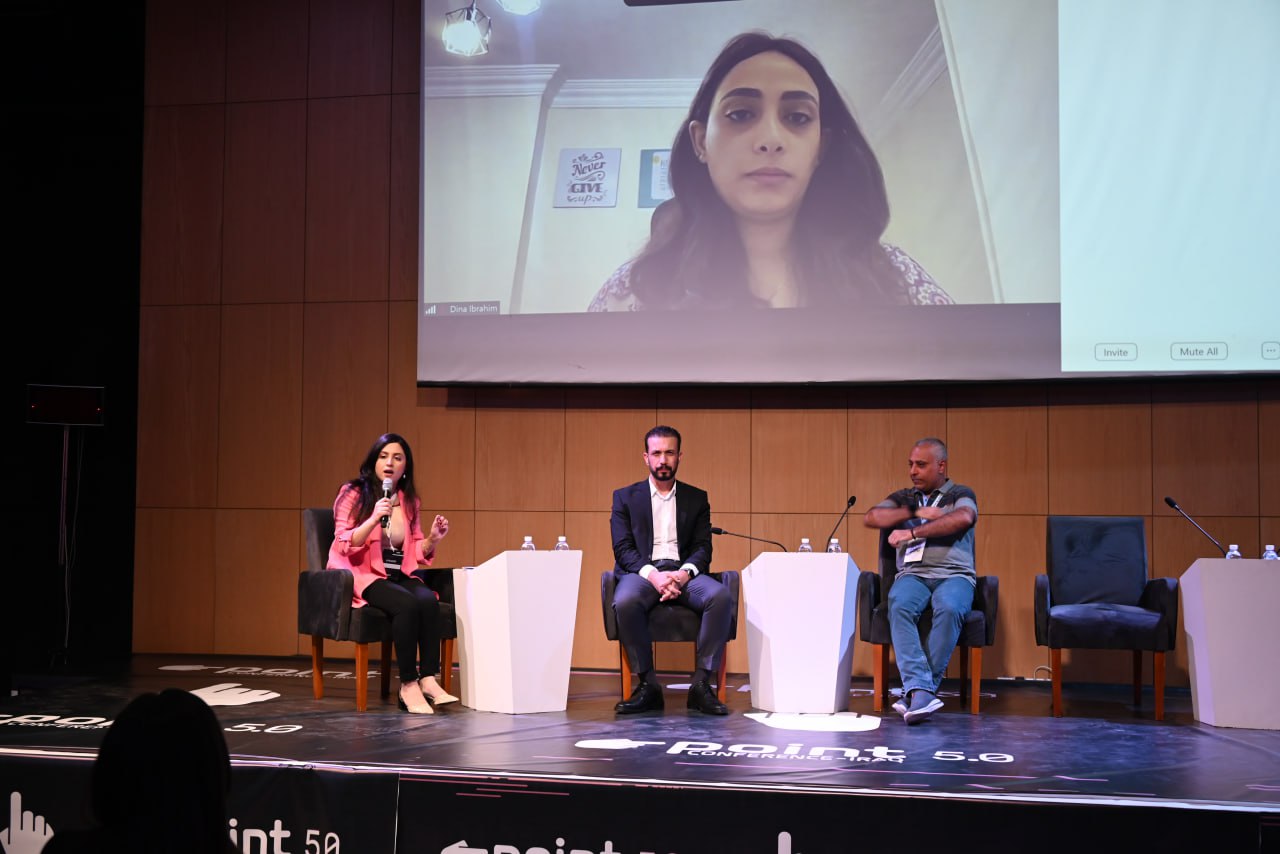
I believe there's a necessity to focus on legislation. However, these laws shouldn't be drawn from oppressive countries whose realities are worse than Iraq's. Is it logical to adopt models from China and Russia? At "Ansam," we're collaborating with the "Freedom" organization on a report about Iraq after entering the classification process. Internet shutdowns are becoming more frequent, even during exams for 9th-grade students. Who compensates these subscribers for their losses?
Interventions:
Byshdar: Why isn't there an alternative plan instead of cutting the internet during elections, like using jamming devices? Especially when the law imposes penalties for causing harm to companies?
Abdul Azim responds: I'm not in favor of internet shutdowns under any circumstances. The real solution lies in having alternatives and problem-solving measures, not internet shutdowns. There should be urgent and temporary solutions... Instead of cutting the internet during exams, the issue of question leaks should be addressed.
Alaa Eidhan: Engineers Syndicate The Communications and Information Technology Law prepared in 2017, submitted to Parliament... Will the parliament rely solely on its members to pass this legislation, or will there be consultative sessions with experts?
Abdul Azim responds: Coordination with sectorial entities involved holding sessions with them, shedding light on the aspects and provisions of the law.
Gallery
Memories from past Events
Content



FAQ
Frequently Asked Question
I have a question
When and where will the next conference take place?
The conference will be held on June 24–25, 2024 in Sarajevo at Dom Mladih.
Who can attend the conference?
How can I register to attend?
Will the conference be live-streamed?





Partners




Tawasoul Organization for Youth Empowerment · Iraq – Baghdad – Karradah city
+964 770 790 6400
Tawasoul Organization for Youth Empowerment · Iraq – Baghdad – Karradah city ·
Mobile: +964 770 211 1332
Copyright©2025.Pointiraq. All Right Reserved.