The threat of misinformation is on the rise with the presence of artificial intelligence, and journalists lack the tools to confront it.
September 15, 2023
Just imagine media content being entirely generated by robots and artificial intelligence technologies. Journalists and other opinion-makers feel the danger in how it can impact civil peace through the distortion or inaccuracy of information, at the very least. Therefore, the Arab region, and Iraq specifically, are facing a "real danger," discussed in the third session of the Point Iraq Conference's fifth edition. During this session, the Iraq Media Meter project and the Communication Organization called on all initiatives and organizations to collaborate in formulating a unified methodology to combat misinformation.
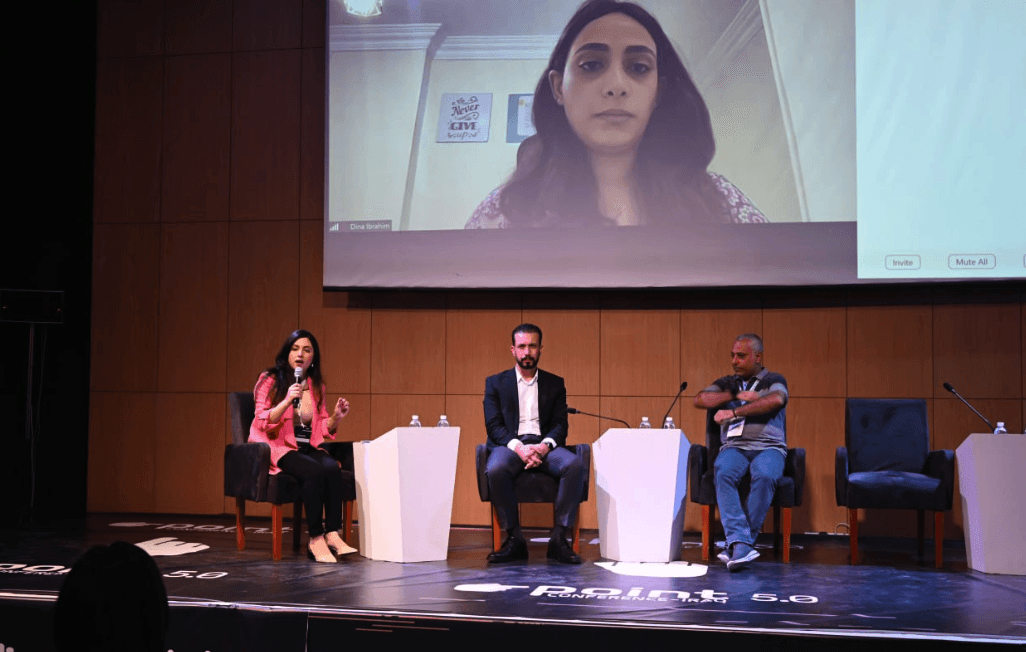
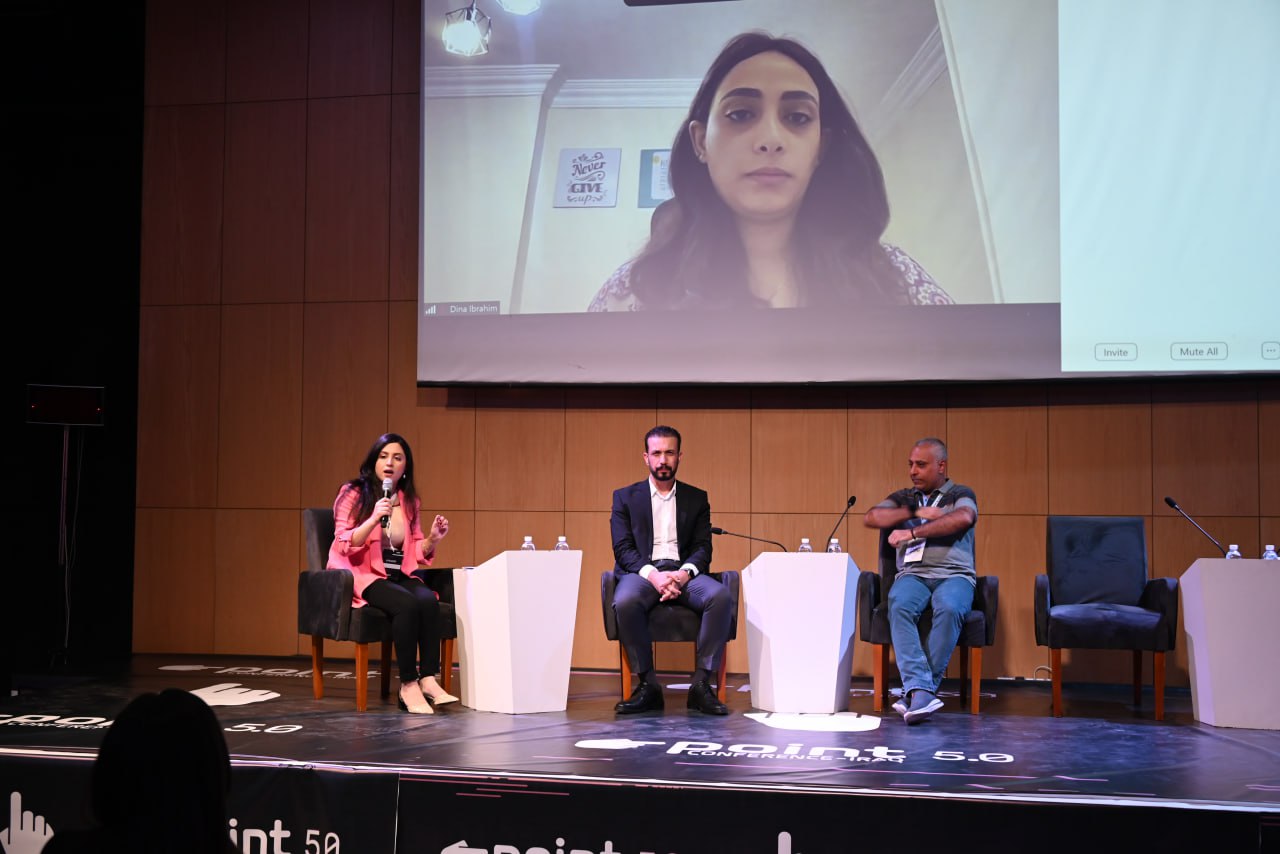
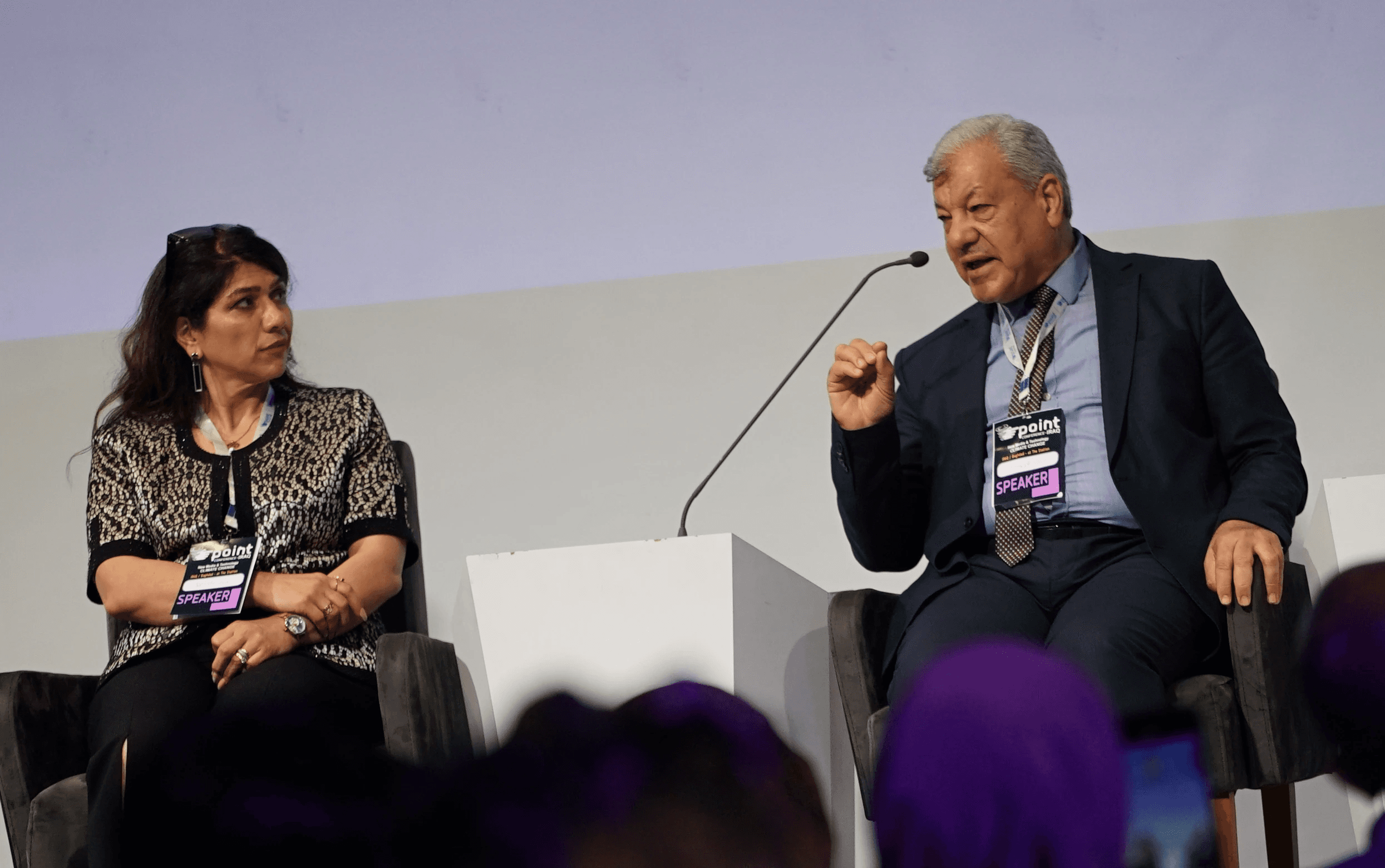
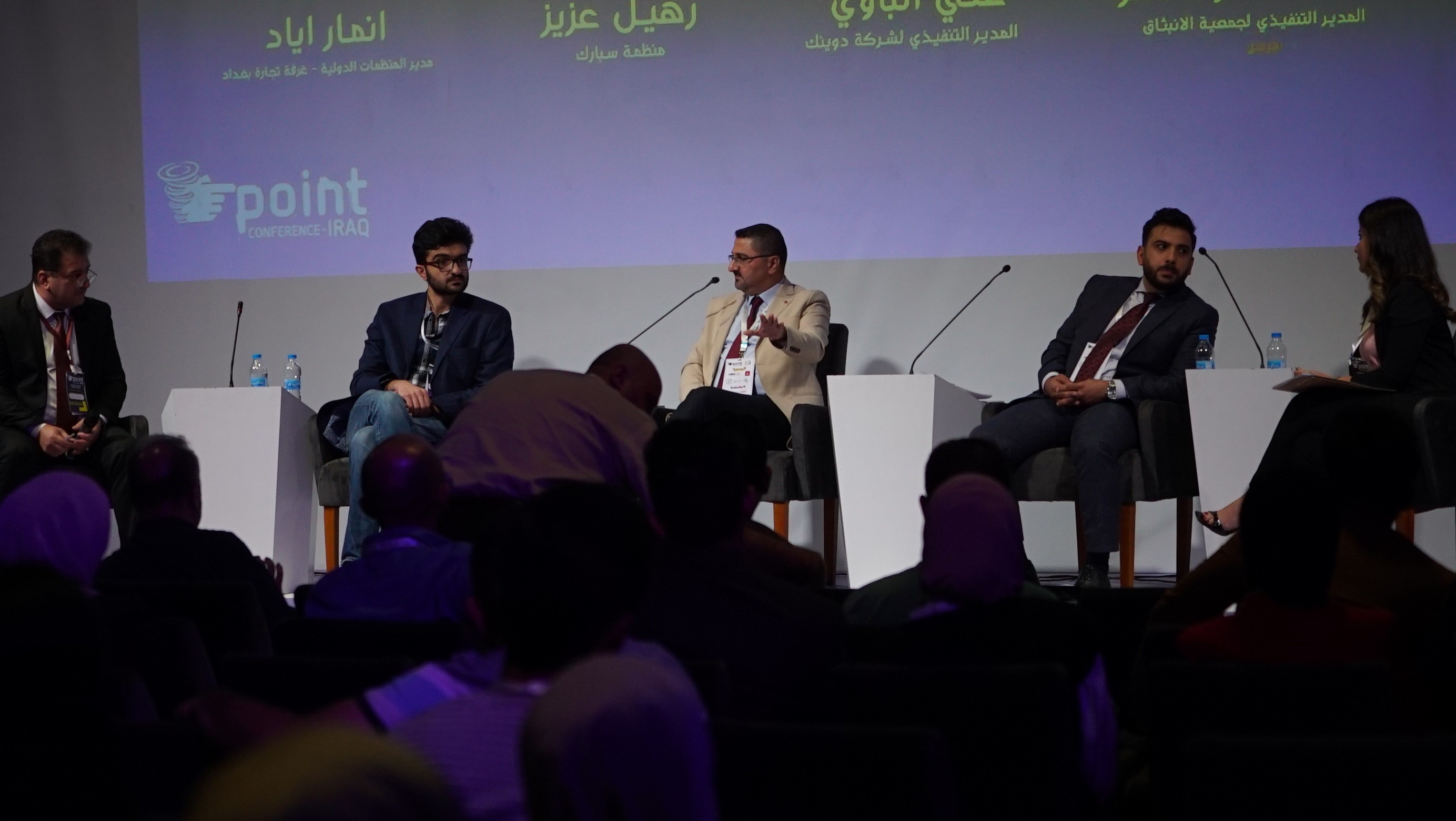
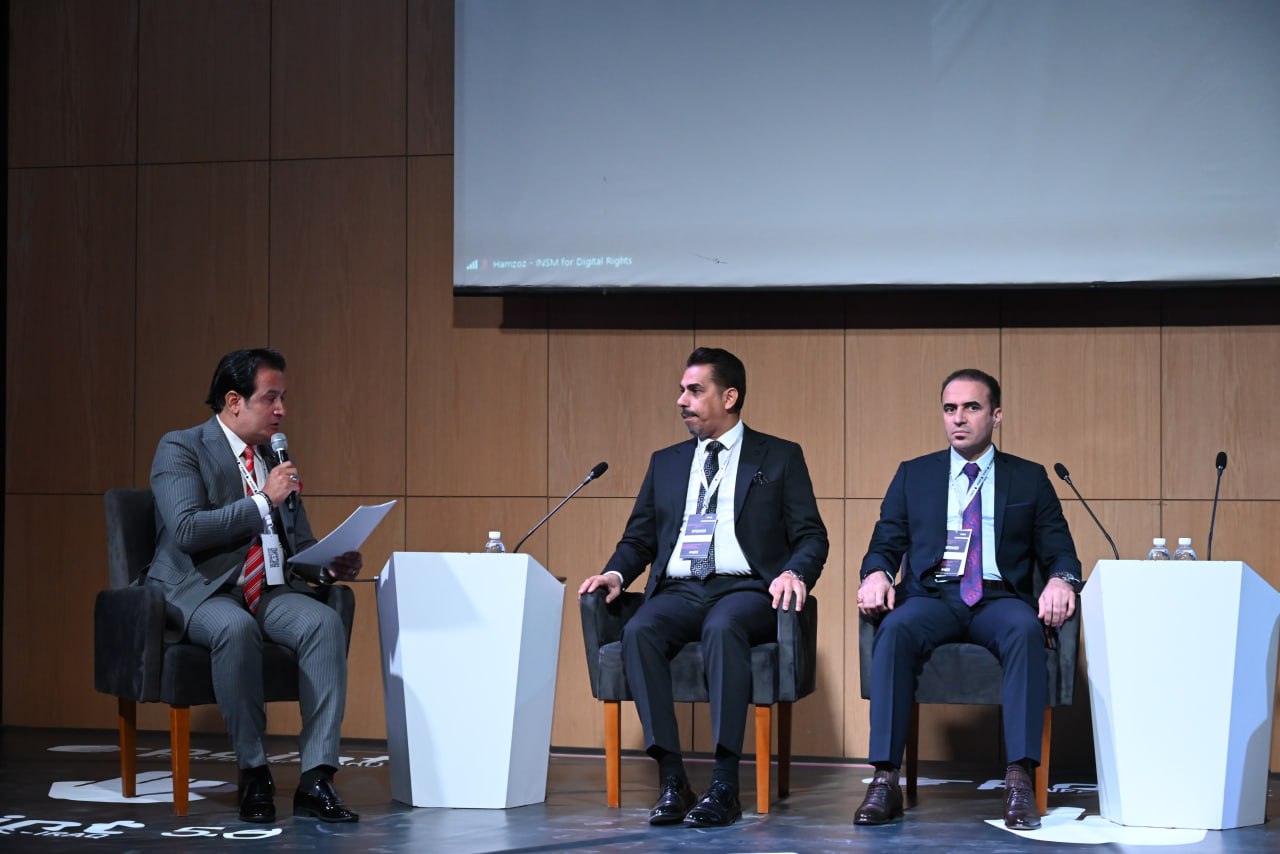
"The Journey of Fact-checking in the Arab Region" was the title of this session, featuring participants such as Saja Mortada, the head of Arab Fact-checking Network from Lebanon, Dina Ibrahim, the director of Akhbar Meter Egypt project, Aso Wahab, the director of the The Checker project within the "ANSM" network, and Mustafa Saadoun, the director of the "Bahosh" campaign within the Iraqi Observatory for Human Rights, Facilitated by Tamara Emad the director of Akhbar Meter Iraq project.
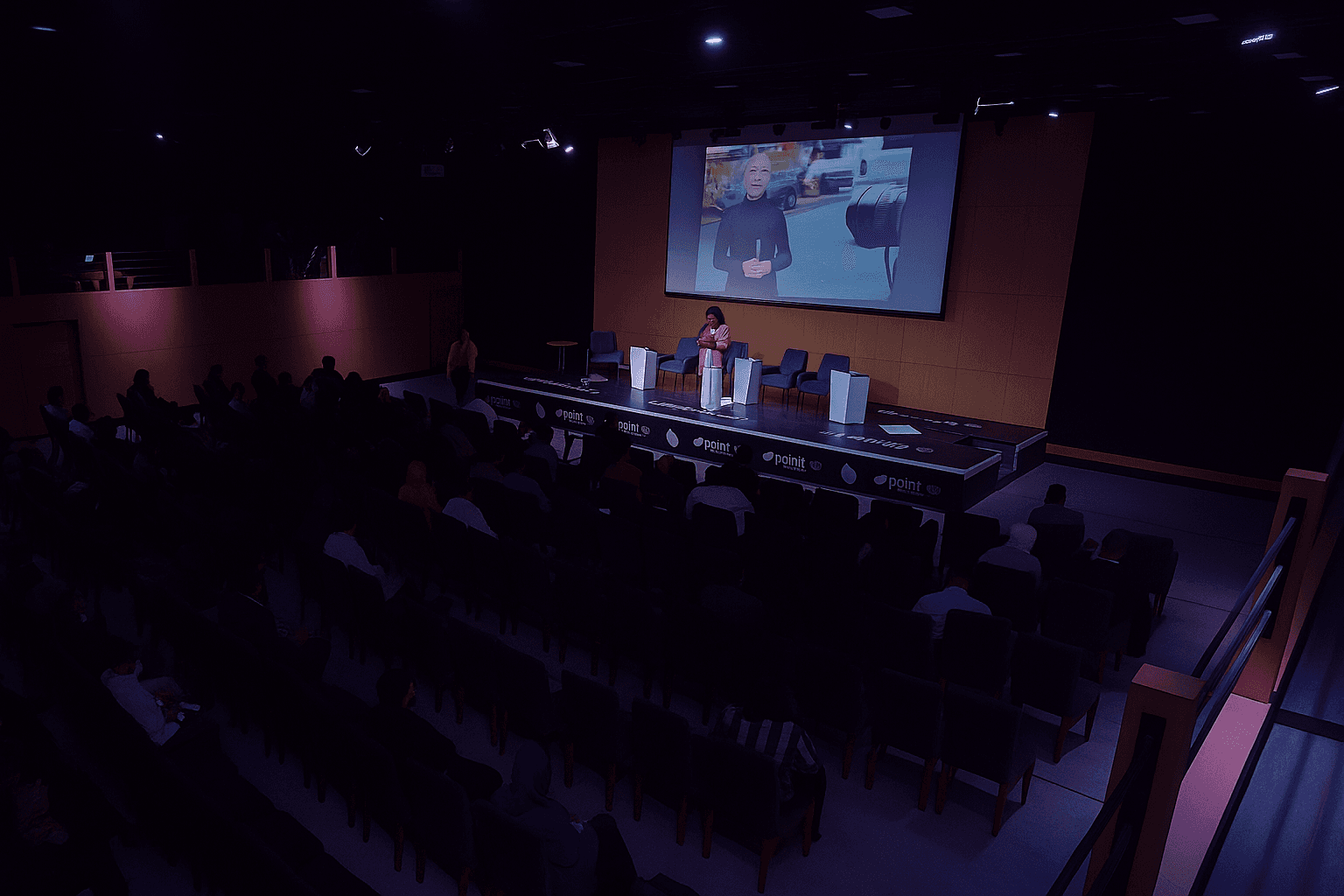
The session began with a technical presentation by AI specialist Osama Ismail, who discussed artificial intelligence, its tools, how it works, learns, and how to interact with it. He then presented a news bulletin delivered by an AI-generated news anchor, warning of the dangers of believing in deep fakes.
After offering condolences to the Arab nations affected by earthquakes and floods in recent days, the participants discussed how to deal with fake news that arises during natural disasters and political crises.
Saja Mortada, the head of the Arab Fact-Checking Network, confirmed that "tools to combat misinformation and fact-checking tools are weak during crises unless there is coordination and collaboration between initiatives and institutions working on fact-checking." She added, "Unfortunately, fact-checking tools need further development to tackle deepfakes."
Regarding the solution, Mortada stated, "First, we need cooperation, and then we need to improve our working tools, build capabilities to be ready for crises, and have the necessary tools at all times." She pointed out that "the third pillar, after cooperation and capacity building, is financial support, especially considering that we are talking about a very critical region in terms of information censorship and restricted access."
Mortada expressed her regret that "dealing with content generated by artificial intelligence is often done without awareness and any verification." She noted that "artificial intelligence does not provide 100% accurate results, so human review can detect misinformation. Therefore, it is essential to enhance the skills of professionals in this field before dealing with artificial intelligence."
Regarding the impact of misinformation on public opinion makers, journalists, and activists, Mustafa Saadoun, the director of the Bahosh initiative, believes that "most of the disseminators of misinformation in Iraq are journalists, bloggers, and opinion-makers."
Saadoun warns that "the danger of misinformation in Iraq, in particular, is related to people's lives. The most significant evidence of this is the incident in Jabla, Babil, where misinformation was provided to the authorities, resulting in the killing of an entire family. Subsequently, the authorities disseminated misinformation to cover it up."
Saadoun explains that "recently, we have started a series of training sessions on information verification before dissemination. We need monitoring, and continuous verification because misinformation has become a general threat to life." He also points out that "the second danger we face with misleading information is that some individuals involved in exposing misinformation can become targets for blackmail."
Misinformation can indeed have serious consequences, especially when it affects the decisions and actions of individuals and authorities. Vigilance, fact-checking, and media literacy are essential tools in combating the spread of misinformation.
Mustafa Saadoun points out that "the danger of misinformation has turned into a process of ignorance, which is a violation of human rights." He calls on the media to "establish even a simple team to fact-check news and information before publishing it, especially since the biggest institutions, unfortunately, have played a role in misleading public opinion."
"In summary, in Iraq, we are facing a real danger. We have approximately six platforms to combat misinformation, but compared to hundreds of platforms, media outlets, and electronic armies that work to spread misinformation, our efforts are unequal," according to Saadoun.
Dina Ibrahim, the director of the Akhbar Meter Egypt project, sees a significant problem in the media where there is pressure on journalists to publish information without verifying it. Instead, there is a push to publish sensational news to capture the audience's attention, often without returning to the tools for verifying information or even identifying its primary source.
Ibrahim also points out that journalists often lack knowledge of information verification tools and struggle when confronted with artificial intelligence. She suggests that if there were journalists with specific standards and an informed audience, it would be possible to mitigate the impact of deepfakes generated by artificial intelligence. Increasing media literacy among journalists and the public is crucial in countering the effects of misinformation and artificial intelligence in the media.
Regarding the use of artificial intelligence by journalists, Dina Ibrahim suggests that "this is an area where journalists need to have a fundamental understanding of data and then leverage artificial intelligence to save time, such as in translation." She explains, "The Wall Street Journal's experiment, which limited article generation by compiling only its archived articles and not those published across the internet, was done to ensure the accuracy of information."Aso Wahab, the director of the Verifier project, also emphasized that in recent years, especially with successive crises, there has been significant misinformation, starting from media institutions and extending to society.He added that "with the introduction of artificial intelligence and the lack of knowledge about it among journalists and influencers, it has created a new crisis."Aso highlights that "our biggest problem is 'electronic flies,' which may use technology to generate news and videos through artificial intelligence and promote them to mislead society.
" He points out that even those working to combat misinformation struggle with this issue, as few of them have expertise in the field of artificial intelligence and deep fakes. The increasing danger extends to various aspects, including the spread of pornography.He also notes that institutions working to combat fake news often have coordination and collaboration, but in Iraq, there is a digital divide and a lack of digital education and literacy.However, Mustafa Saadoun has a different perspective, saying, "Unfortunately, in civil society, we all act as prime ministers, refusing to cooperate and form a single alliance. The problem in Iraq is institutional."During the session, the Communication Organization for Youth, represented by Tamara Emad, the director of the Iraq Media Meter project, issued a call to work on formulating a unified methodology to combat misinformation in Iraq.
Gallery
Memories from past Events
Content
FAQ
Frequently Asked Question
I have a question
When and where will the next conference take place?
The conference will be held on June 24–25, 2024 in Sarajevo at Dom Mladih.
Who can attend the conference?
How can I register to attend?
Will the conference be live-streamed?




Partners



Tawasoul Organization for Youth Empowerment · Iraq – Baghdad – Karradah city
+964 770 790 6400
Tawasoul Organization for Youth Empowerment · Iraq – Baghdad – Karradah city ·
Mobile: +964 770 211 1332
Copyright©2025.Pointiraq. All Right Reserved.